Robotic assistance can outperform traditional methods for some cooking and dressing tasks—not by replacing human judgment, but by making difficult, repetitive actions more accessible and consistent. In research, robots have helped people with disabilities perform activities such as stirring food, handling utensils, and putting on clothing. Results depend on the person, task, equipment, and level of assistance: a robot may improve independence for one action while remaining slower or less practical than a human caregiver for another. Evidence from assistive-robotics studies, disability research, and rehabilitation practice shows why these systems matter, what “better” means, and where safety, cost, and user choice still set limits.
What robotic assistance means for cooking and dressing tasks
Robotic assistance is the use of a programmable machine to support a person in completing an everyday activity. For cooking and dressing, assistance can range from a robot arm that moves a utensil to a system that helps position clothing or carries out a sequence of actions under the user’s direction. The World Health Organization describes assistive technology broadly as products and systems that maintain or improve functioning and independence; robotic assistants are one specialized form of that support.
The comparison with “traditional methods” is not simply robot versus person. Traditional support may involve doing a task manually, using adapted tools, or receiving help from a caregiver. Robotic systems can be advantageous when a person wants more control, needs repeatable movement, or benefits from assistance tailored to their abilities. They are not automatically faster, cheaper, safer, or more satisfying. A meaningful comparison considers task completion, effort, time, safety, autonomy, reliability, and the user’s preferences.
The need is substantial. The WHO and UNICEF’s 2022 Global Report on Assistive Technology estimated that more than 2.5 billion people need one or more assistive products, with access gaps particularly large in lower-income settings. That estimate covers many kinds of products, not robots specifically, but it illustrates the wider importance of technologies that support daily living. Cooking and dressing are also core activities of daily living: difficulty with them can affect nutrition, privacy, personal dignity, and participation at home.
How robotic assistance improves cooking and dressing performance
In this context, “improves” means that assistance helps a person achieve a useful outcome—such as completing a task with less physical effort, greater independence, or more reliable control—compared with an appropriate alternative. It does not mean that every robot beats every conventional method on every measure. Assistive-robotics researchers commonly evaluate performance through task success, completion time, user input, safety, and perceived usability.
Task completion and personal independence
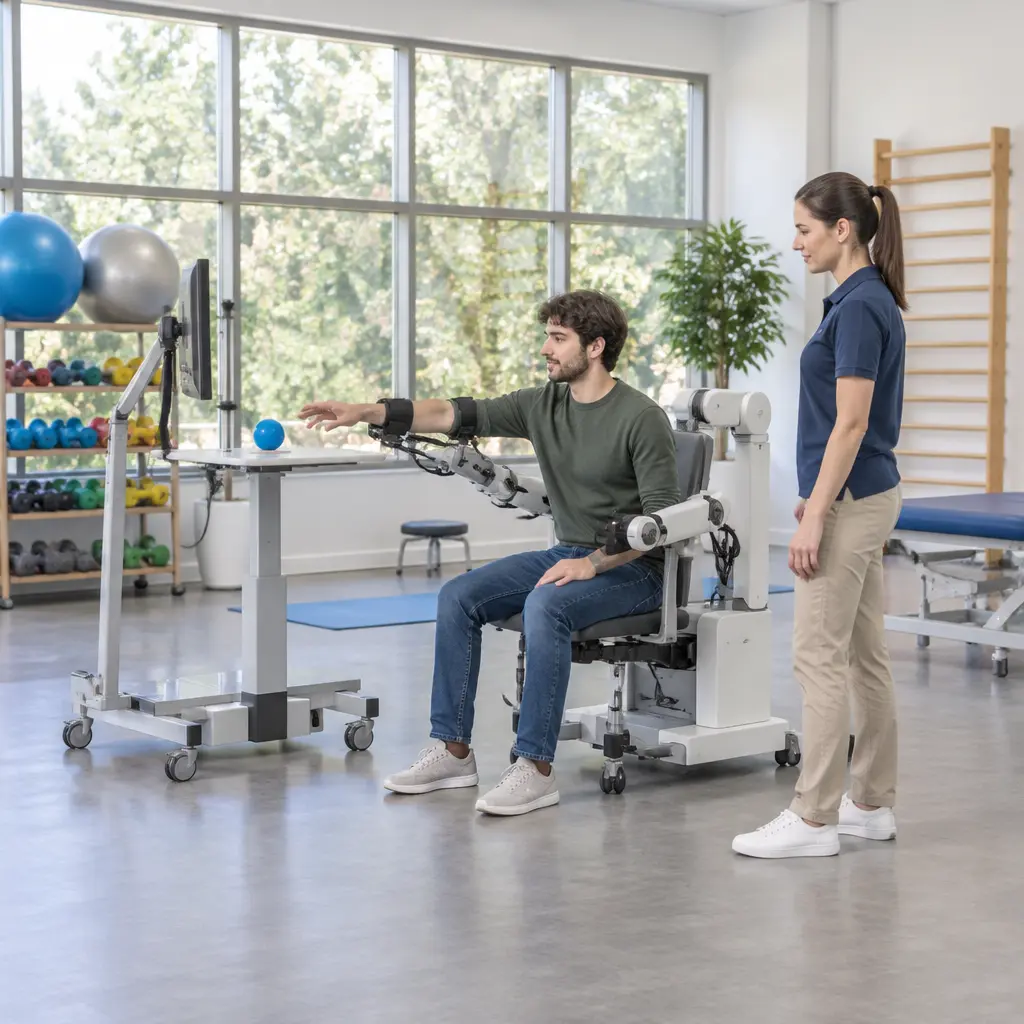
Task completion measures whether the user can accomplish an activity, either independently or with the level of support they choose. A robot arm with a joystick, switch, or other interface can let someone with limited arm movement direct actions such as grasping a container or bringing an item within reach. This can reduce the need for another person to perform every physical step, although setup, supervision, and assistance may still be necessary.
The “Assistive Kitchen” research project at the University of Washington explored how a robot could support people with motor impairments in kitchen activities, including retrieving objects and assisting with food preparation. It demonstrated the value of interactive assistance, but also the complexity of household environments: objects vary, surfaces are cluttered, and safe manipulation requires adapting to the user and the situation. Such research supports a cautious conclusion: robotic assistance can enable tasks that would otherwise be difficult or unavailable, but successful use depends on dependable interaction and appropriate task selection.
Effort, consistency, and task time
A robot can reduce the physical effort needed for repeated or demanding movements and may perform a calibrated action consistently. For example, a powered system can hold or move an object while the user controls its position, reducing the need for sustained grip strength. Yet consistency is not the same as speed: a user may need to position the robot, select a command, wait for movement, or correct an error. Research findings therefore need to be read in relation to the specific task and baseline comparison rather than treated as proof that robots are universally faster.
A useful evaluation reports more than a headline success rate. It should state who participated, what task was tested, how much training was provided, what counted as completion, and whether the comparison was against unaided performance, adapted tools, or human help. Where published studies involve small participant groups or laboratory settings, their findings can establish feasibility but may not predict performance across all homes.
Choice, privacy, and quality of life
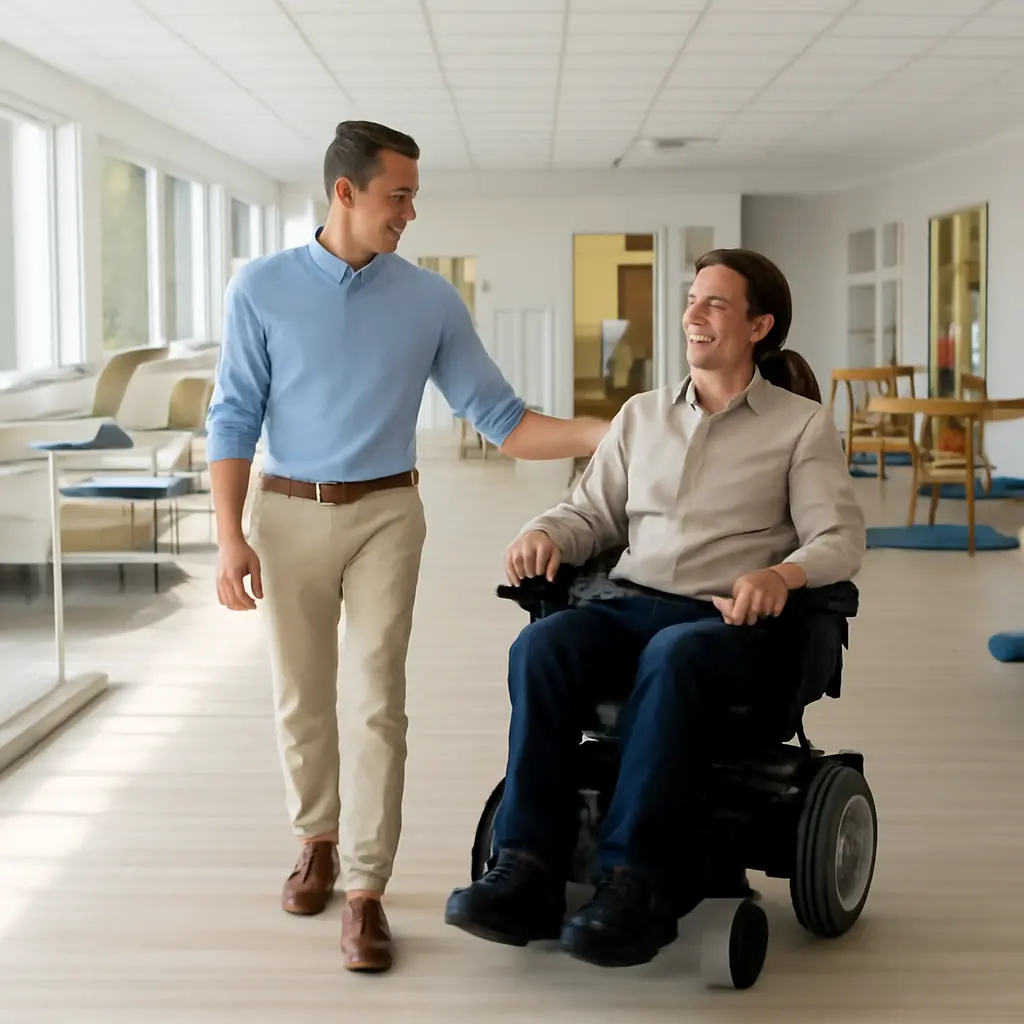
Independence is not the same as doing everything alone. It can mean having greater choice over when and how assistance is provided. Dressing is particularly personal: a user may value privacy and control over the sequence of actions even if a caregiver remains involved. A robot may offer an additional option, but only if its controls, pace, and physical interaction fit the person’s needs.
The WHO’s assistive-technology framework emphasizes that products should be appropriate, affordable, available, and supported by services such as assessment, fitting, and training. This principle applies directly to domestic robots. A technically capable system that is difficult to operate, incompatible with a person’s home, or unavailable for repair may not improve real-world independence.
Cooking robots support food preparation and kitchen access
Cooking assistance includes technologies that help with reaching, holding, cutting, stirring, transferring, or serving food. The category includes robotic arms, mobile manipulators, and specialized automated appliances. These tools can be especially relevant to people with limited strength, coordination, or range of motion, but kitchen work involves heat, sharp objects, liquids, and breakable items—hazards that make safe operation essential.
Robotic arms and interactive kitchen help
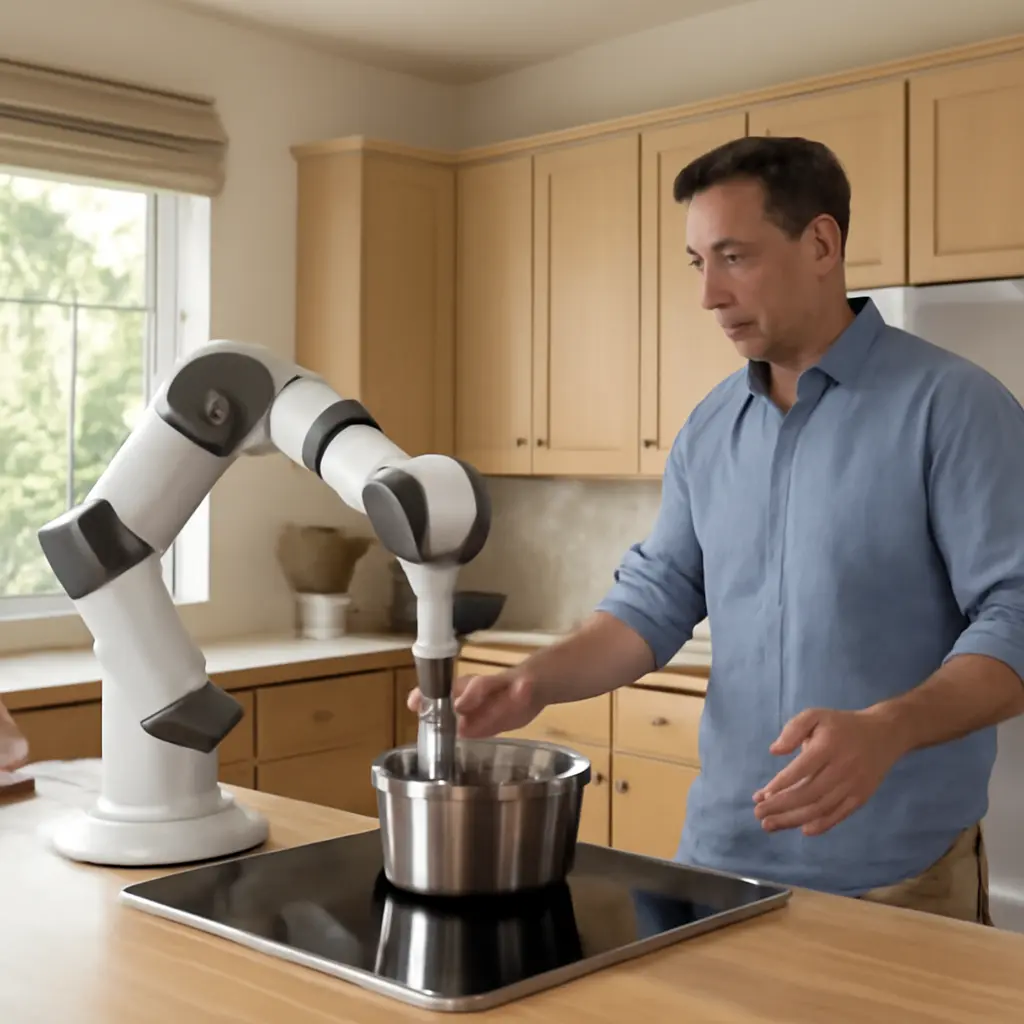
A robotic arm is a powered, articulated device that moves an end-effector, such as a gripper or utensil. In assistive settings, the user may control it directly or request actions through a simplified interface. The University of Washington’s Assistive Kitchen work is a notable example of research into robots that help users access kitchen objects and perform food-related actions. The broader lesson is that useful assistance often combines human direction with machine movement rather than asking the robot to autonomously cook an entire meal.
Researchers must account for variable objects and user intent. A gripper that works well on a rigid cup may not safely handle a soft package, hot pan, or slippery food. Systems therefore benefit from adjustable speed, clear feedback, emergency stops, and interaction designs that let users correct or cancel actions.
Automated cooking appliances and task-specific machines
Task-specific cooking machines automate a narrow function, such as stirring or dispensing ingredients, while general-purpose assistive robots can be directed toward a wider range of objects and actions. Specialized equipment may be easier to operate and more predictable, whereas a general-purpose arm may offer flexibility. Neither approach is automatically superior: the right choice depends on the user’s abilities, the task’s hazards, available space, cleaning requirements, and budget.
Automation should also be distinguished from accessibility. A machine that follows a recipe may automate cooking but still require the user to lift ingredients, open packaging, or transfer hot food. Assistive design evaluates the complete activity—from preparing ingredients to cleaning up—so that a device does not merely shift the hardest step elsewhere.
Kitchen safety and practical limits
Safety is a defining measure of cooking assistance. A robot operating near knives, boiling water, flames, or hot surfaces needs predictable movement and safeguards against collisions or accidental contact. The U.S. Centers for Disease Control and Prevention reports that adults aged 65 and older experience millions of falls each year, underscoring the broader importance of stable movement and safe home environments; this figure is not specific to robotic kitchens, but it highlights why accessibility solutions should be assessed for environmental risk as well as task performance.
Practical deployment also involves maintenance, cleaning, counter space, power, and training. A system that performs well in a research demonstration may require adaptation before it can work reliably in a household. Human oversight remains important when a task involves heat, cutting, or food-safety decisions.
Dressing robots assist with personal care and clothing
Dressing assistance refers to technologies that help a person put on, adjust, or remove clothing. Research prototypes include robotic arms and systems that manipulate garments, while commercial assistive products more often address particular steps or provide positioning support. Clothing is flexible, deformable, and highly variable, so dressing is a demanding robotics problem: a system must locate fabric, avoid pulling painfully, and adapt to different bodies and garments.
Robotic garment manipulation
Garment manipulation is the robotic handling of fabric to achieve actions such as finding an opening, aligning a sleeve, or moving clothing into position. Unlike a rigid object, fabric changes shape when touched and can fold or snag unpredictably. Researchers have investigated assistive dressing robots that combine perception, controlled movement, and user feedback, but many systems remain research prototypes rather than widely available household products.
For a user with restricted shoulder or hand movement, a robot that holds a garment steady or guides a sleeve may reduce strain and increase control. A safe system must allow the user to pause, communicate discomfort, and retain control over pace. The benefit should be judged against the person’s preferred method, including adaptive clothing, dressing aids, or caregiver support.
Personalized assistance and human oversight
Personalized dressing assistance adapts to a person’s mobility, comfort, clothing, and routine. The National Institute on Disability, Independent Living, and Rehabilitation Research supports research that advances independent living and participation for people with disabilities; this wider rehabilitation perspective emphasizes user goals rather than technology for its own sake. In practice, individualized assessment is essential because the same robot may be useful for one garment or movement and unsuitable for another.
Human assistance remains valuable when a task requires judgment, reassurance, or a response to pain and unexpected movement. A robot should be understood as an additional option within a person-centered support plan, not as a mandate to remove caregivers or eliminate human contact.
How robotic and traditional methods compare
Traditional methods include unaided performance, adapted utensils or dressing aids, environmental changes, and caregiver assistance. Robotic assistance is most compelling when it improves a user-defined outcome that simpler approaches do not adequately address. Comparisons should consider the whole task and the person’s preferences, rather than assuming that advanced technology is inherently better.
- Robots may provide repeatable movement and enable direct user control, but they can require setup, training, and maintenance.
- Adapted tools are often simpler and less expensive, but may not provide enough reach, strength, or movement for some users.
- Caregivers can respond flexibly and provide social support, but assistance may depend on availability and can reduce privacy for personal tasks.
- Task-specific appliances can be reliable for a narrow function, while general-purpose robots may offer flexibility at greater cost and complexity.
A well-designed evaluation should compare options with the same user and task where possible, record assistance levels and completion time, and include comfort, confidence, safety, and willingness to use the system. It should also distinguish laboratory performance from everyday use. These measures help explain why a robot may be better for independence but worse for speed, or why a conventional aid remains the best fit for a particular person.
Conclusion: robotic assistance is most effective when it follows the user
Robotic assistance can improve cooking and dressing by supporting task completion, reducing physical effort, and expanding a person’s control over daily routines. Kitchen robots show promise in reaching and food-preparation tasks, while dressing systems address the difficult problem of manipulating flexible garments. The evidence supports potential benefits, not a blanket claim that robots outperform traditional methods in every setting.
The broader implication is that assistive technology should be judged by whether it works in a person’s home, respects their preferences, and is safe, maintainable, and affordable. People considering these systems can consult occupational therapists, rehabilitation engineers, and assistive-technology services to compare robotic options with adapted tools and human support. Further progress will depend on testing with diverse users in real homes and publishing clear measures of safety, usability, independence, and cost.
Sources: World Health Organization and UNICEF, Global Report on Assistive Technology, 2022, https://www.who.int/publications/i/item/9789240049451; World Health Organization, Assistive technology, https://www.who.int/news-room/fact-sheets/detail/assistive-technology; University of Washington, The Assistive Kitchen, https://assistive.cs.washington.edu/; U.S. Centers for Disease Control and Prevention, Facts About Falls, https://www.cdc.gov/falls/data-research/facts-stats/index.html; National Institute on Disability, Independent Living, and Rehabilitation Research, https://acl.gov/about-acl/about-national-institute-disability-independent-living-and-rehabilitation-research