Spinal cord injury (SCI) rehabilitation devices are technologies designed to help people with impaired movement or sensation practice activities, improve access to daily tasks, and—in some cases—recover function. They range from functional electrical stimulation and robotic gait-training systems to powered exoskeletons and brain-computer interface research. Their promise is real but not unlimited: outcomes depend on the injury, health, training, and device, and many technologies support mobility rather than restore normal walking. The World Health Organization estimates that about 15.4 million people worldwide were living with SCI in 2021, underscoring why evidence, access, and individualized rehabilitation matter.
SCI rehabilitation devices: function, access, and recovery potential
SCI rehabilitation devices are tools used within rehabilitation to support movement, exercise, communication, or independence after damage to the spinal cord. The National Institute of Neurological Disorders and Stroke describes SCI as damage that can disrupt motor, sensory, and autonomic signals between the brain and body. Rehabilitation devices work around or train these disrupted pathways; they do not constitute a universal cure.
The distinction between assistive function and neurological recovery is important. A wheelchair or exoskeleton may help someone travel or stand without demonstrating that the spinal cord has healed. Conversely, repeated task-specific training may contribute to functional improvements for some people, while results vary substantially. A 2024 review in Spinal Cord reported that powered exoskeleton studies commonly document supervised walking and exercise, but evidence for broad, lasting improvements in everyday independence remains limited by small studies, varied protocols, and participant selection.
Mobility devices and the SCI rehabilitation attribute
Mobility devices are equipment that supports movement from place to place, including manual and powered wheelchairs, gait-training systems, and wearable exoskeletons. The World Health Organization defines assistive technology broadly as systems and services related to products that help maintain or improve functioning and independence. In SCI care, choosing a device is therefore not simply a matter of selecting the newest technology: clinicians and users consider goals, transfer ability, skin health, balance, endurance, environment, and available support.
Wheelchairs: everyday mobility and independence
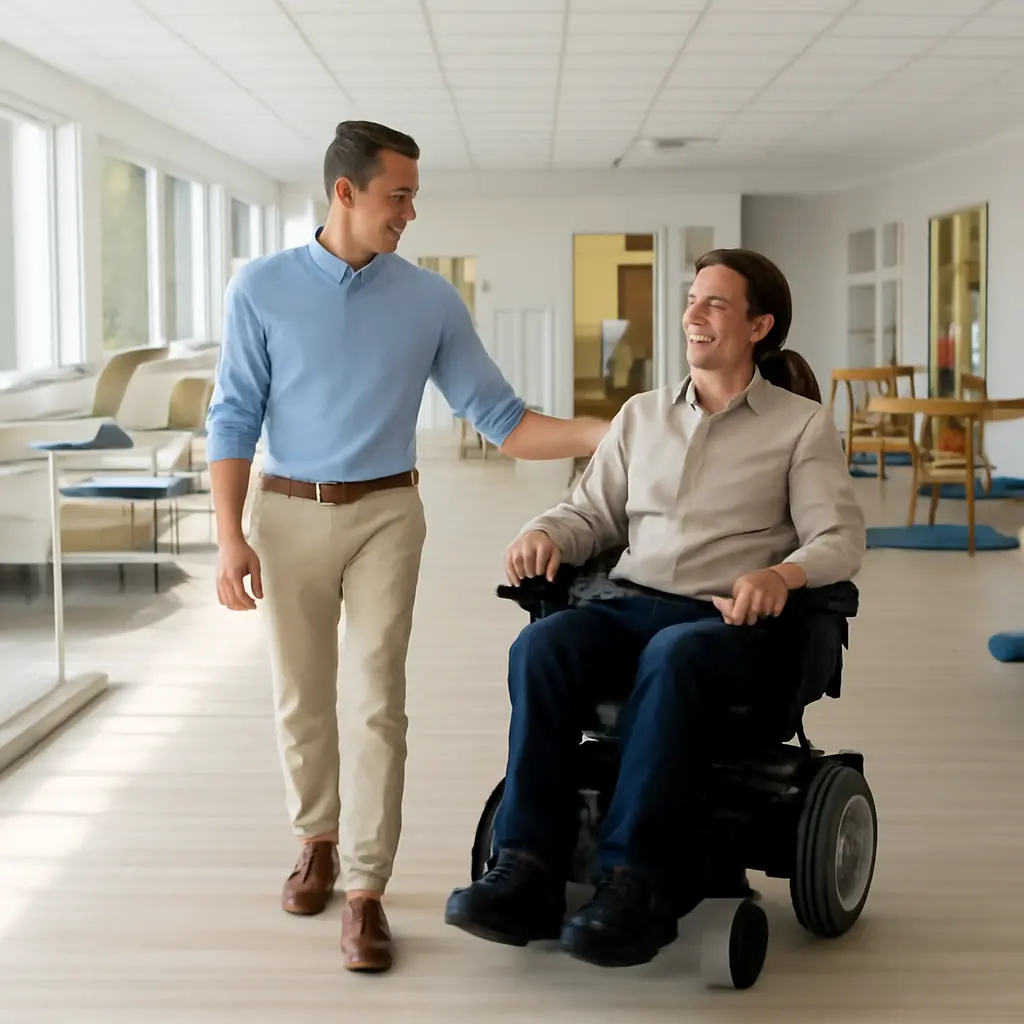
Wheelchairs are often the most practical mobility technology for people with SCI, whether used temporarily during early recovery or as a long-term means of independent travel. Proper seating and configuration can support posture, comfort, pressure management, and access to work or community life. Manual chairs may suit people with sufficient upper-body strength and suitable environments; powered chairs can reduce physical demands and provide control features tailored to an individual’s abilities.
The World Health Organization’s wheelchair provision guidance emphasizes assessment, fitting, training, and follow-up rather than product delivery alone. That service model matters because an ill-fitting chair can contribute to discomfort, pressure injury risk, and reduced participation. For many users, wheelchair skills training and environmental accessibility have a more immediate effect on daily mobility than an experimental walking device.
Powered exoskeletons: wearable, supervised walking
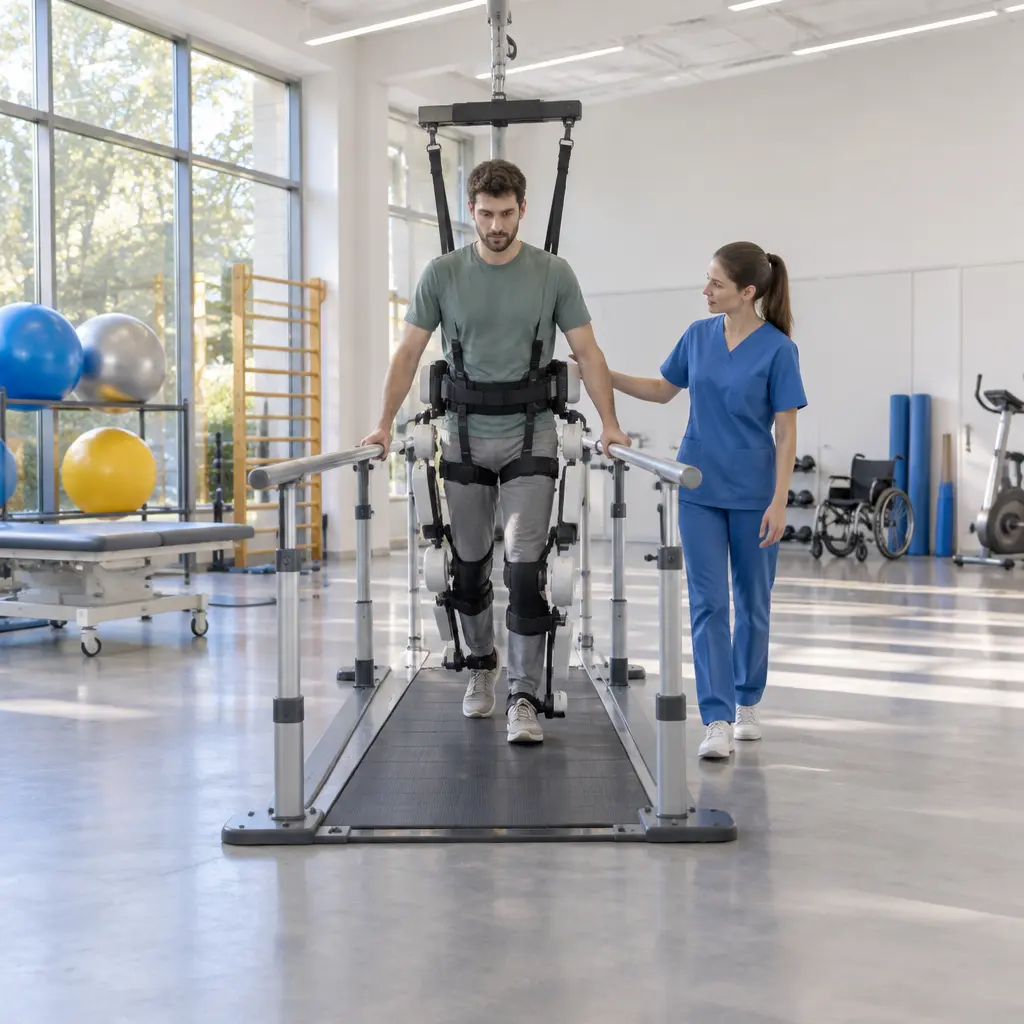
A powered exoskeleton is a wearable robotic frame that uses motors, sensors, and control systems to assist standing and stepping. The user typically operates the device through controls, weight shifts, or a clinician’s input, while crutches or a walker provide balance. These systems may enable selected people with SCI to practice upright movement and walk short distances in controlled settings.
A systematic review in Journal of NeuroEngineering and Rehabilitation found that exoskeleton walking is feasible for some people with SCI, but emphasized the need for screening, supervision, and attention to adverse events such as falls, skin issues, and fractures. Eligibility commonly depends on bone health, joint range, body size, cardiovascular tolerance, and the level and completeness of injury. Exoskeletons can be useful for structured therapy or specific activities, but they are not yet a replacement for wheelchairs in most everyday mobility situations.
Robotic gait-training systems: repetitive practice
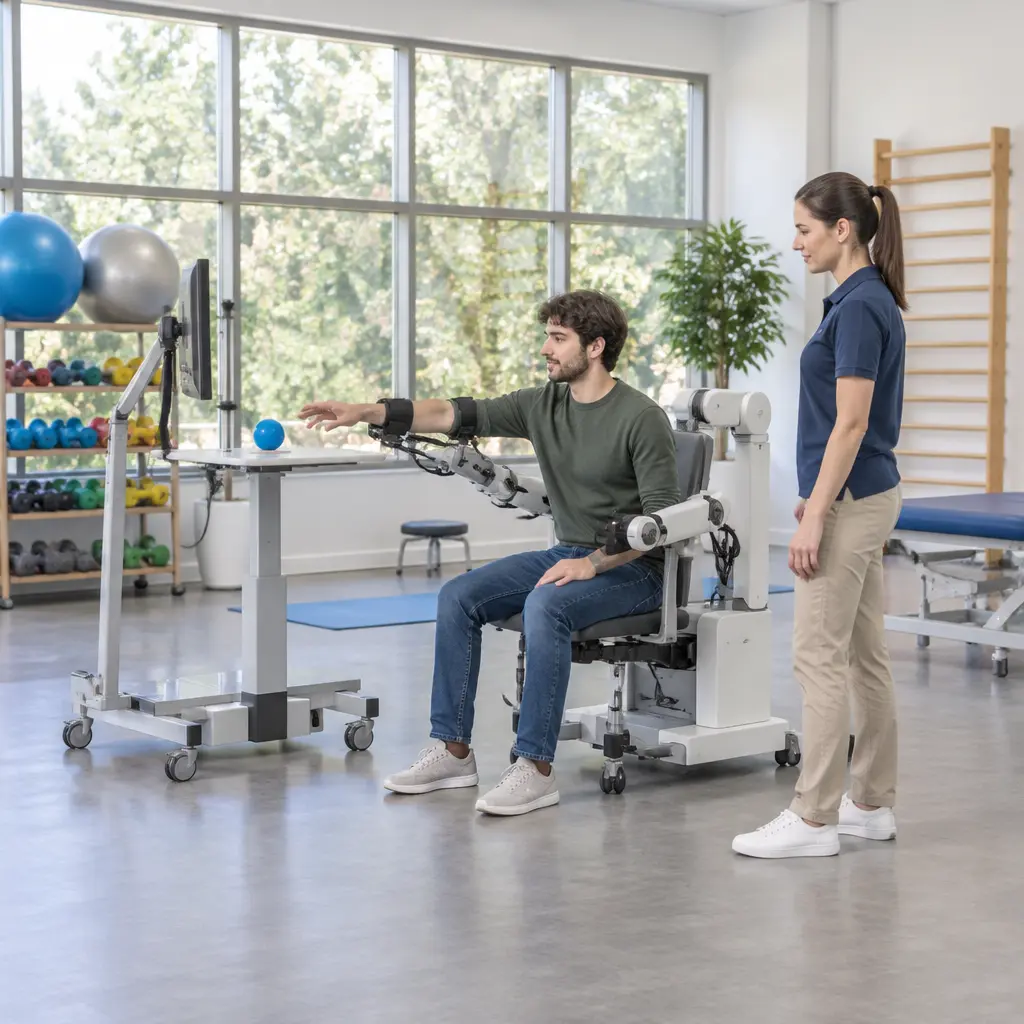
Robotic gait-training devices include treadmill-mounted systems that guide leg movement and body-weight support systems that reduce the load a person must bear while practicing stepping. They allow therapists to deliver repeated, controlled movement while adjusting assistance. The proposed benefit is task-specific practice: repeated stepping may help reinforce motor learning and conditioning, particularly when combined with conventional rehabilitation.
However, more repetition does not automatically mean better recovery. The Cochrane review of locomotor training after SCI found insufficient evidence to identify one walking-training approach as clearly superior for improving walking outcomes across people with SCI. Robotic systems should therefore be selected according to a person’s goals and response, not treated as a guaranteed route to independent walking.
Electrical stimulation and neural-interface rehabilitation
Electrical stimulation technologies use electrical signals to activate nerves or muscles, while neural interfaces attempt to connect brain or spinal signals with devices. These approaches differ in invasiveness and purpose: some stimulate muscles to support movement, others target spinal circuits during rehabilitation, and research interfaces may translate neural activity into commands. Together, they illustrate how SCI rehabilitation is moving from mechanical assistance toward more direct interaction with the nervous system.
Functional electrical stimulation: activating muscles
Functional electrical stimulation (FES) delivers carefully timed electrical pulses to peripheral nerves, causing selected muscles to contract during a task. FES cycling, for example, can produce leg movement for exercise, while FES systems can also assist grasp or other specific functions. The approach is distinct from a powered exoskeleton: FES stimulates the user’s own muscles, whereas an exoskeleton moves the limbs with external motors.
The American Spinal Injury Association and rehabilitation clinicians recognize stimulation as one option for addressing muscle activation and exercise goals, but suitability depends on intact peripheral nerves, skin condition, tolerance, and the task being targeted. FES may support conditioning and repeated movement; it does not guarantee restoration of voluntary control or walking. Clinicians must also monitor skin and muscle response and adapt stimulation settings to the individual.
Epidural stimulation: research on spinal networks
Epidural electrical stimulation uses surgically implanted electrodes over the spinal cord to deliver stimulation to spinal networks. In research settings, stimulation is often paired with intensive rehabilitation and can help some participants generate movements or improve selected functions. It is not the same as a noninvasive therapy session: implantation requires surgery, specialized follow-up, and careful consideration of risks and benefits.
Small clinical studies, including work published in Nature and Nature Medicine, have reported regained or improved movement in individual participants with chronic SCI when stimulation was combined with training. These results are scientifically important, but they do not establish a broadly available cure. Participant numbers remain small, protocols differ, and larger controlled trials are needed to determine who benefits, how durable benefits are, and which outcomes can be expected outside research centers.
Brain-computer interfaces: translating intention into action
A brain-computer interface (BCI) measures brain activity and converts selected signals into commands for an external device or stimulation system. For SCI, research aims include controlling a cursor, robotic limb, or stimulation that produces movement. Some experimental systems combine brain signals with spinal stimulation, seeking to bridge communication around the injury.
In 2023, a study in Nature described a “digital bridge” linking brain and spinal stimulation in one person with chronic SCI, enabling standing and walking with support during testing. The result demonstrated feasibility, not a routine treatment: the system required implanted technology, individualized decoding, and substantial engineering and clinical support. BCIs remain an emerging research area, with questions about durability, safety, cost, and real-world use still unresolved.
Choosing devices: safety, evidence, and access
A rehabilitation device is most useful when it matches a person’s functional goals and fits into a broader care plan. The Spinal Cord Injury Model Systems program stresses that SCI rehabilitation addresses more than walking: it may include self-care, transfers, upper-limb function, respiratory and cardiovascular health, pressure-injury prevention, and community participation. Device choice should be made with rehabilitation professionals and the person using it, with realistic measures of progress.
Safety screening and individualized training
Safety screening considers injury characteristics, bone density, joint mobility, blood pressure regulation, skin integrity, pain, and the ability to use controls. These factors are especially important for upright devices and stimulation systems. Training typically begins under professional supervision; users and caregivers need instruction in setup, transfers, emergency procedures, maintenance, and recognizing problems such as skin irritation or unusual pain.
Autonomic dysreflexia is a potentially life-threatening blood-pressure response that can occur in some people with injuries at or above T6, according to the National Institute of Neurological Disorders and Stroke. It is one reason exercise and device use should account for individual medical risks, not merely mechanical fit. A clinician can help establish safe activity parameters and an appropriate response plan.
Evidence, cost, and equitable access
The evidence base varies by technology. Wheelchairs and seating systems are established assistive tools, while implanted stimulation and BCI systems remain specialized or experimental. For many newer devices, studies have small samples and focus on supervised performance rather than long-term independence, participation, or quality of life. These differences should be clear when discussing likely benefits.
Access is also shaped by cost, insurance coverage, local rehabilitation services, equipment availability, and the need for maintenance. The WHO and UNICEF’s 2022 Global Report on Assistive Technology estimated that more than 2.5 billion people need at least one assistive product, with access gaps particularly pronounced in lower-income settings. That global estimate covers many needs beyond SCI, but it highlights why innovation must be paired with trained providers, affordable services, and accessible environments.
Conclusion: matching SCI rehabilitation devices to real goals
SCI rehabilitation devices are expanding options through wheelchairs, robotic gait training, exoskeletons, functional electrical stimulation, and emerging neural interfaces. Their value depends on the attribute being sought: practical mobility, repeated exercise, muscle activation, or experimental recovery of movement. Current evidence supports careful, individualized use—not promises that a device will restore normal function. People considering a technology should discuss goals, eligibility, risks, evidence, costs, and follow-up with an SCI rehabilitation team, and consult reputable clinical-trial and assistive-technology resources for further reading.
Sources: World Health Organization, Spinal cord injury, https://www.who.int/news-room/fact-sheets/detail/spinal-cord-injury; National Institute of Neurological Disorders and Stroke, Spinal Cord Injury, https://www.ninds.nih.gov/health-information/disorders/spinal-cord-injury; World Health Organization, Guidelines on the provision of manual wheelchairs in less-resourced settings, https://www.who.int/publications/i/item/9789241547482; World Health Organization and UNICEF, Global Report on Assistive Technology, 2022, https://www.who.int/publications/i/item/9789240049451; Cochrane, Locomotor training for walking after spinal cord injury, https://www.cochrane.org/CD006676/NEUROMUSC_locomotor-training-walking-after-spinal-cord-injury; Journal of NeuroEngineering and Rehabilitation, systematic review of powered exoskeletons for spinal cord injury, https://jneuroengrehab.biomedcentral.com/; Nature, Walking naturally after spinal cord injury using a brain–spine interface, 2023, https://www.nature.com/articles/s41586-023-06094-5; Nature Medicine, Targeted spinal cord stimulation for restoring motor function after spinal cord injury, https://www.nature.com/nm/; Spinal Cord Injury Model Systems, Rehabilitation and recovery after spinal cord injury, https://msktc.org/sci; American Spinal Injury Association, International Standards for Neurological Classification of Spinal Cord Injury, https://asia-spinalinjury.org/