Rehabilitation engineering applies engineering principles to tools, technologies, and environments that help people with disabilities or age-related limitations do the things they want and need to do. Its central design challenge is to fit a solution to a person’s goals, abilities, surroundings, and preferences—not simply to create a device. The World Health Organization estimates that 2.5 billion people need one or more assistive products, a figure that could rise to 3.5 billion by 2050. This article explains how engineers define and design rehabilitation tools, how users and clinicians guide that work, which technologies are changing, and what evidence shows about access and impact.
How Rehabilitation Engineering Defines Person-Centered Design
Rehabilitation engineering is the application of engineering knowledge to develop, adapt, and evaluate systems that support function and participation for people with disabilities. The Rehabilitation Engineering and Assistive Technology Society of North America (RESNA) describes assistive technology as equipment or systems used to increase, maintain, or improve an individual’s functional capabilities. In practice, rehabilitation engineering spans products, software, services, and changes to physical or digital environments.
Its defining attribute is person-centered design: a tool is judged by whether it helps a particular person accomplish meaningful activities in real contexts. That may mean enabling someone to communicate, move around a home, return to work, or participate in school. The engineering process therefore combines technical performance with fit, safety, affordability, usability, and the user’s own priorities.
The scale of unmet need makes this approach consequential. WHO and UNICEF’s 2022 Global Report on Assistive Technology estimates that more than 2.5 billion people need at least one assistive product, including wheelchairs, hearing aids, prostheses, and communication tools. Nearly one billion people are estimated to lack access. These figures describe assistive technology broadly, not rehabilitation engineering alone, but they show why design must account for cost, availability, maintenance, and local conditions as well as invention.
Design Begins with Goals and Context
A rehabilitation tool is a device, system, or adaptation intended to support an activity or function. Engineers and clinical teams begin by learning what a person wants to do, what currently makes that difficult, and where the task takes place. A wheelchair that works well indoors may be unsuitable for rough paths; a communication app that performs in a clinic may fail in a noisy classroom or when its user is tired.
This context-first approach aligns with the International Classification of Functioning, Disability and Health (ICF), developed by WHO. The ICF treats functioning as an interaction among health conditions, activities, participation, and environmental and personal factors. It helps teams look beyond a diagnosis to barriers such as inaccessible doors, unreliable internet, limited caregiver support, or a device that is difficult to maintain.
Co-Design and Iterative Testing
Co-design means involving people who will use a tool—and often caregivers, therapists, and other practitioners—in decisions throughout development. They can identify practical requirements that a technical specification may miss, such as one-handed adjustment, discreet appearance, simple cleaning, or compatibility with a person’s daily routine. Engineers then build and test prototypes, gather feedback, and revise the design.
This iterative process is especially important because a device can meet laboratory targets yet be uncomfortable, confusing, or unsuitable at home. The World Health Organization’s Priority Assistive Products List identifies 50 priority products and emphasizes that access depends on an effective system of provision, including assessment, fitting, training, follow-up, and repair—not merely manufacturing equipment.
How Rehabilitation Engineering Matches Tools to Function
Rehabilitation engineering includes several connected categories: mobility and positioning, communication and sensory access, prosthetics and orthotics, and environmental or digital adaptations. These are related by a shared goal—supporting activity and participation—but each requires different measurements, expertise, and evaluation methods. The right solution may be a commercially available product, a customized device, an adjustment to an existing tool, or a combination.
Mobility and Seating Systems
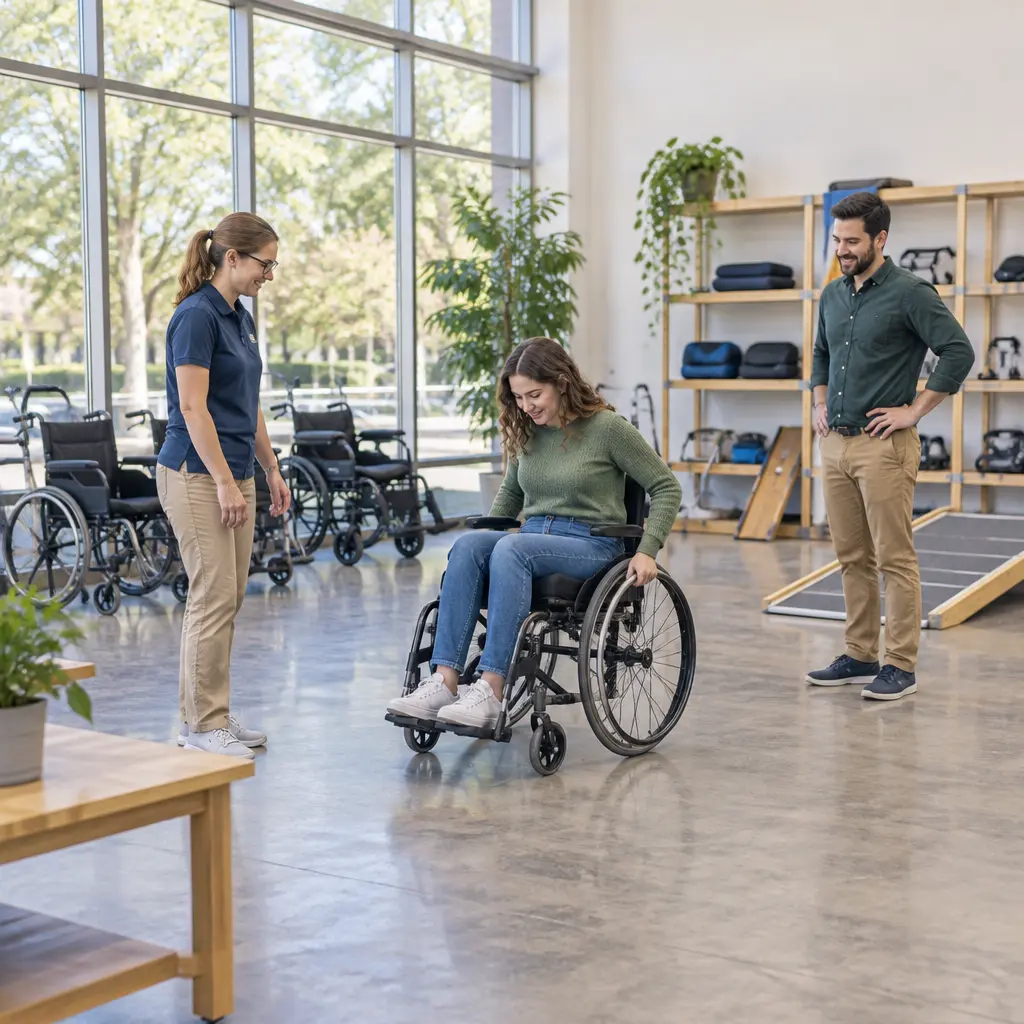
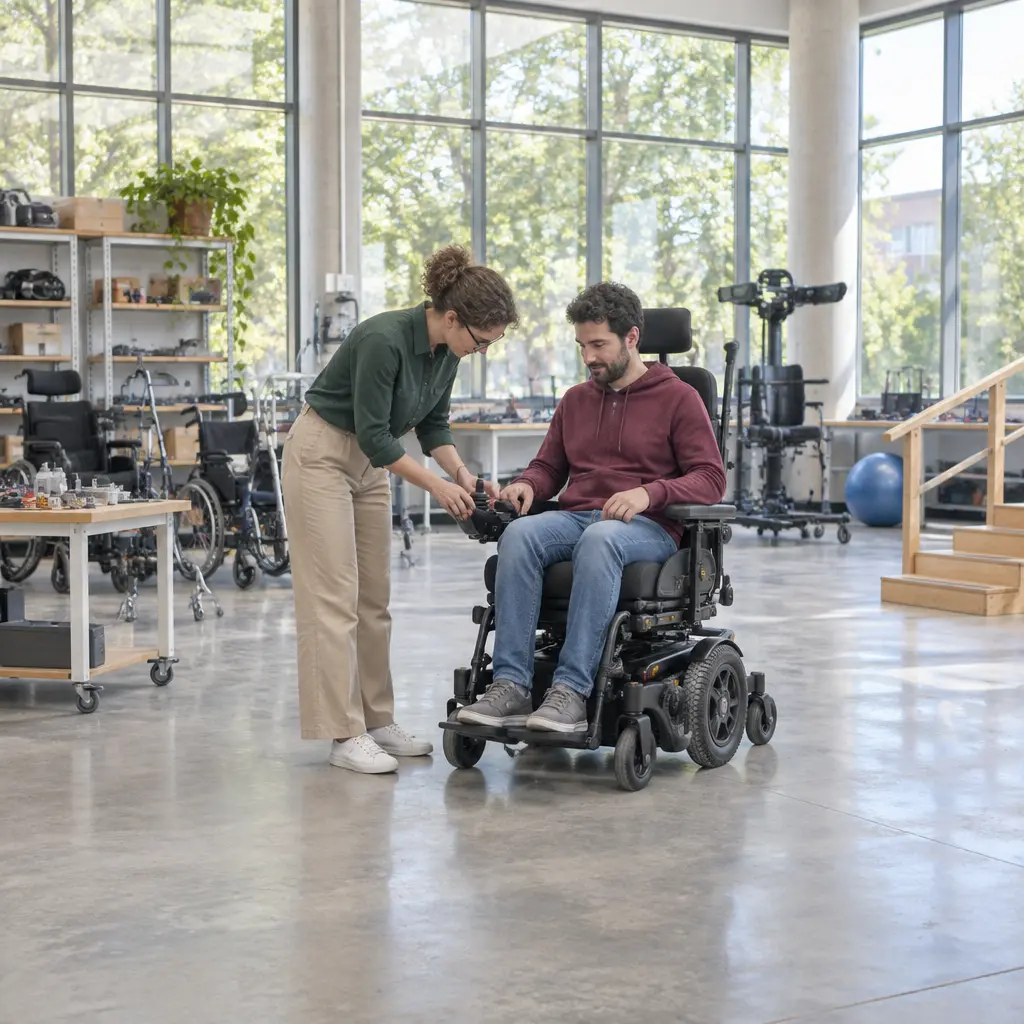
Mobility engineering covers manual and powered wheelchairs, scooters, seating systems, and related controls. A seating system must be evaluated for posture, pressure management, stability, comfort, transport, and the user’s ability to operate it. A powered chair may also need customized controls, such as a joystick, head array, or alternative switch interface.
WHO’s assistive technology estimates include wheelchairs among products needed by millions of people worldwide. Yet provision is not simply a matter of selecting a model: assessment, fitting, user training, maintenance, and repair affect whether a chair remains safe and useful. Engineers may also consider the built environment, since ramps, door widths, transport, and terrain can determine whether a mobility system works beyond the clinic.
Communication and Sensory Access
Communication technologies support people who cannot rely on speech or standard interfaces. Augmentative and alternative communication (AAC) can include picture boards, text-to-speech software, dedicated speech-generating devices, eye-gaze systems, and switches. Engineers and specialists select access methods around a user’s vision, movement, language, cognition, and communication goals.
Sensory technologies include hearing aids, cochlear implants, screen readers, magnification, captioning, and tactile interfaces. The WHO estimates that more than 1.5 billion people live with some degree of hearing loss and projects that nearly 2.5 billion may do so by 2050; at least 700 million may require hearing rehabilitation. These estimates reinforce the need for accessible design and services, while also showing why a technology’s effectiveness depends on fitting, instruction, follow-up, and affordability.
Prosthetics, Orthotics, and Wearable Robotics
Prostheses replace or supplement a missing body part, while orthoses support, align, or protect a body segment. Rehabilitation engineers work with users and clinicians to balance fit, comfort, function, durability, and appearance. Materials and fabrication methods—including digital scanning and 3D printing—can support customization, but a printed device is not automatically safe or clinically appropriate; it still requires suitable design, testing, and professional oversight.
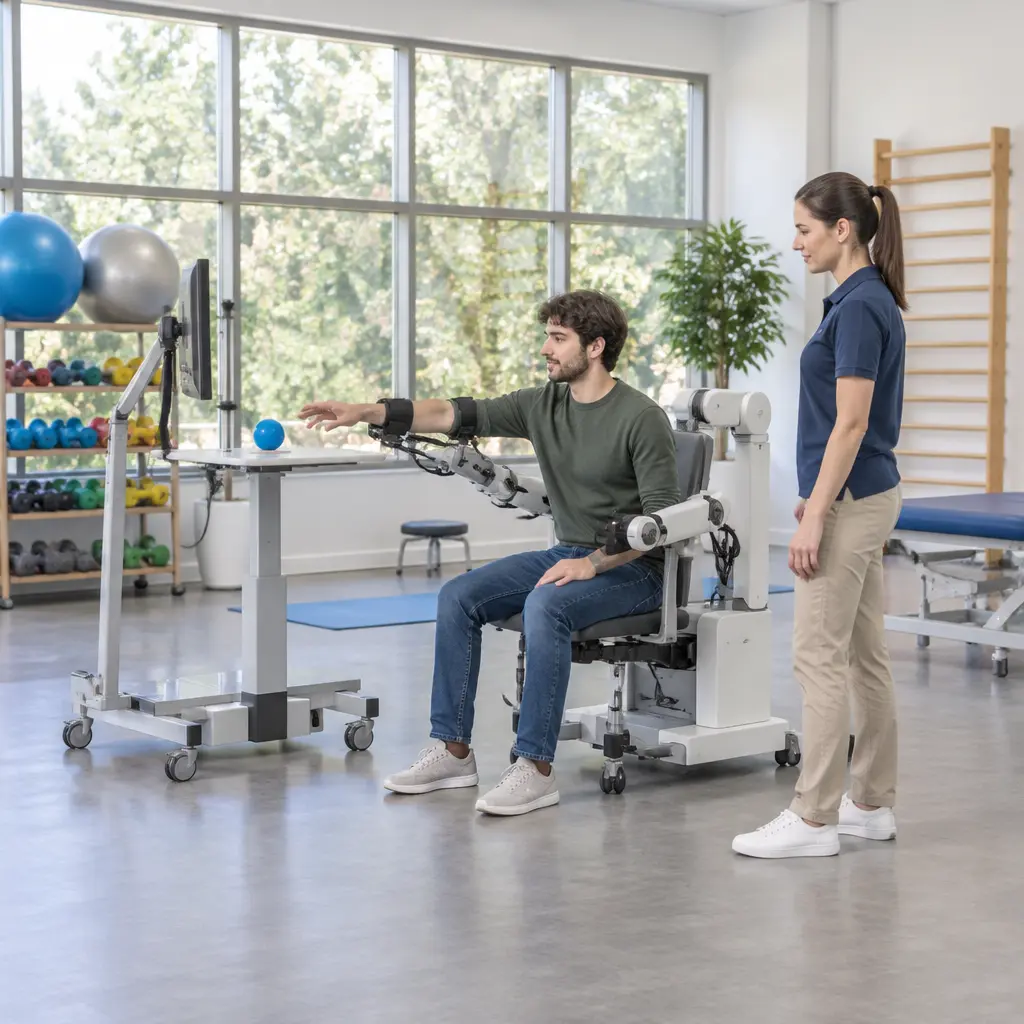
Wearable robotics, including powered exoskeletons, use sensors, actuators, and control software to assist movement. Their engineering challenges include detecting user intent, coordinating motion, managing battery life, and preventing falls or excessive forces. These devices can support specific rehabilitation or mobility goals, but evidence and suitability vary by product and user; they are not universal replacements for wheelchairs or other mobility aids.
Environmental Controls and Accessible Interfaces
Environmental control systems let users operate everyday devices—such as lights, doors, phones, or computers—through switches, voice commands, eye gaze, or other accessible inputs. Universal design and accessibility engineering extend this idea to buildings, websites, and services, reducing barriers before an individual device is needed. The Web Content Accessibility Guidelines, published by the World Wide Web Consortium, provide widely used recommendations for making digital content more perceivable, operable, understandable, and robust.
These solutions illustrate an important distinction: rehabilitation tools can change the person’s interaction with a task, while accessible environments can change the task’s barriers. Effective design often combines both. A person may use a switch-accessible tablet, for example, but still need accessible digital content and reliable network access to participate fully.
How Rehabilitation Engineers Validate Safety and Impact
Validation is the process of checking whether a tool is safe, usable, reliable, and effective for its intended users and tasks. It connects engineering performance to real-world outcomes. A device may be technically functional but still fail if it is too difficult to operate, uncomfortable to wear, hard to repair, or poorly matched to the user’s environment.
Usability, Safety, and Reliability Testing
Teams assess usability by observing whether people can learn and operate a system, complete intended tasks, and recover from errors. Safety testing may examine structural strength, skin contact, electrical risks, stability, and foreseeable misuse. Reliability testing asks whether a product continues to work under expected conditions, including repeated use, transport, cleaning, and exposure to weather or dust.
For medical devices, applicable regulatory requirements depend on the product and jurisdiction. In the United States, the Food and Drug Administration regulates medical devices under risk-based frameworks. Standards and regulatory review do not replace user testing: they address defined safety and performance requirements, while real-world evaluation helps establish whether a tool works for the people and settings it is meant to serve.
Measuring Outcomes Beyond the Device
Outcome measures can include task completion, independence, comfort, participation, user satisfaction, device abandonment, repair frequency, and time required from caregivers. Teams may use interviews, observation, clinical measures, and follow-up data to understand whether benefits last after a person leaves a controlled testing environment. Measuring participation matters because a device can improve a physical function without necessarily removing social or environmental barriers.
WHO and UNICEF’s global report highlights that access depends on service delivery as well as products. This means a credible evaluation should consider the whole pathway: referral, assessment, procurement, fitting, training, follow-up, maintenance, and replacement. A chart comparing these stages could show where people most often encounter delays or loss of support; the data should be interpreted alongside user experience rather than as a measure of device quality alone.
Real-World Example: Matching AAC to a User
Consider a student who communicates with eye movements and wants to participate in classroom discussions. A rehabilitation engineering team might compare a low-tech communication board with a tablet-based speech-generating system, assess whether eye-gaze access is reliable, and test the setup in the actual classroom. The team would also consider vocabulary, mounting position, lighting, fatigue, teacher training, and backup communication methods.
The example demonstrates why the best outcome is not necessarily the most advanced device. A system that the student can use consistently, that classmates and staff understand, and that can be maintained may support more participation than a technically sophisticated tool that is difficult to deploy. The design should be reviewed as the student’s needs, skills, and school environment change.
How Rehabilitation Engineering Addresses Access and the Future
A well-designed tool can expand independence and participation, but access remains unequal. Cost, shortages of trained providers, limited repair services, inaccessible infrastructure, and weak procurement systems can prevent people from benefiting. WHO’s estimate that nearly one billion people lack access to assistive products makes clear that engineering innovation must be paired with policies and services that make tools available and sustainable.
Affordability, Repair, and Appropriate Technology
Appropriate technology is designed for the resources, skills, climate, and infrastructure of its intended setting. Engineers can support affordability by using modular parts, designing for repair, documenting maintenance, and avoiding unnecessary complexity. Local production may help in some cases, but it must still meet relevant safety and quality requirements and include a plan for replacement parts and technical support.
The WHO Priority Assistive Products List is a practical reminder that product access is a system issue. A device that cannot be fitted, serviced, or replaced may offer little lasting value. Procurement decisions should therefore consider the total cost of ownership—including training, consumables, repairs, and upgrades—not just the initial purchase price.
Emerging Design Directions
Newer approaches include machine-learning interfaces, more responsive prosthetic control, 3D-printed customization, remote assessment, and connected devices that track use or performance. These methods may improve personalization and support, but they introduce questions about data privacy, cybersecurity, algorithmic bias, and equitable access. A system trained on limited user groups, for instance, may perform less reliably for people whose movement or speech differs from its training data.
The strongest future designs are likely to combine technical advances with established principles: involve users early, test in realistic settings, protect personal data, plan for repair, and evaluate meaningful outcomes. Innovation should expand choices rather than make a single technology a requirement for participation.
Conclusion: Designing Tools Around People
Rehabilitation engineering turns engineering knowledge into practical support for mobility, communication, sensory access, self-care, education, work, and community life. Person-centered design defines the problem around a user’s goals and context; co-design and iteration make tools more usable; and validation tests safety, reliability, and meaningful outcomes. Mobility systems, AAC, prostheses, environmental controls, and digital accessibility are distinct applications of the same principle: technology works best when it fits the person and the world around them.
With billions of people needing assistive products and large gaps in access, the field’s broader task is not only to invent better devices but also to make them affordable, available, maintainable, and respectful of user choice. Readers can learn more through WHO’s assistive technology resources, RESNA’s professional guidance, and local rehabilitation or assistive technology services—and can support inclusive design by involving people with disabilities in decisions from the start.
Sources: World Health Organization and UNICEF, Global Report on Assistive Technology, 2022, https://www.who.int/publications/i/item/9789240049451; World Health Organization, Assistive Technology, https://www.who.int/news-room/fact-sheets/detail/assistive-technology; World Health Organization, Priority Assistive Products List, https://www.who.int/publications/i/item/priority-assistive-products-list; World Health Organization, World Report on Hearing, 2021, https://www.who.int/publications/i/item/world-report-on-hearing; Rehabilitation Engineering and Assistive Technology Society of North America, Assistive Technology, https://www.resna.org/About/Assistive-Technology; World Health Organization, International Classification of Functioning, Disability and Health (ICF), https://www.who.int/standards/classifications/international-classification-of-functioning-disability-and-health; U.S. Food and Drug Administration, Medical Devices, https://www.fda.gov/medical-devices; World Wide Web Consortium, Web Content Accessibility Guidelines (WCAG) 2.2, https://www.w3.org/TR/WCAG22/.