Rehabilitation technology is the devices, software, and related services used to support recovery, maintain or improve function, and help people participate in daily life. Its benefits extend beyond patients: families and caregivers, clinicians, health systems, employers, and communities may also gain when technology improves access, independence, or care coordination. The World Health Organization estimates that 2.4 billion people worldwide could benefit from rehabilitation, while access remains uneven. Who benefits—and how—depends on whether a technology is safe, effective, affordable, accessible, and suited to a person’s goals and circumstances.
Rehabilitation technology benefits people when it supports meaningful function
Rehabilitation technology is a broad category, not a single treatment. It includes assistive products such as wheelchairs and hearing aids; therapeutic technologies such as robotic gait trainers and electrical stimulation; and digital tools such as remote rehabilitation platforms. These technologies can help people recover skills, compensate for impairments, prevent complications, or carry out activities more independently. Their value is best judged by outcomes that matter to the individual—such as mobility, communication, self-care, participation, and quality of life—not by novelty alone.
The need is substantial. The World Health Organization’s 2022 global report on assistive technology estimates that more than 2.5 billion people need at least one assistive product, and nearly one billion do not have access. Rehabilitation technology can address some of this gap, but only when products are available, properly fitted, supported with training, and maintained over time.
Rehabilitation technology serves users, caregivers, and care systems
The World Health Organization defines rehabilitation as “a set of interventions designed to optimize functioning and reduce disability in individuals with health conditions in interaction with their environment.” Rehabilitation technology is one means of delivering or supporting those interventions. It includes assistive technology, therapeutic equipment, and digital rehabilitation; these related categories overlap, but they serve different purposes.
People receiving rehabilitation benefit through function and participation
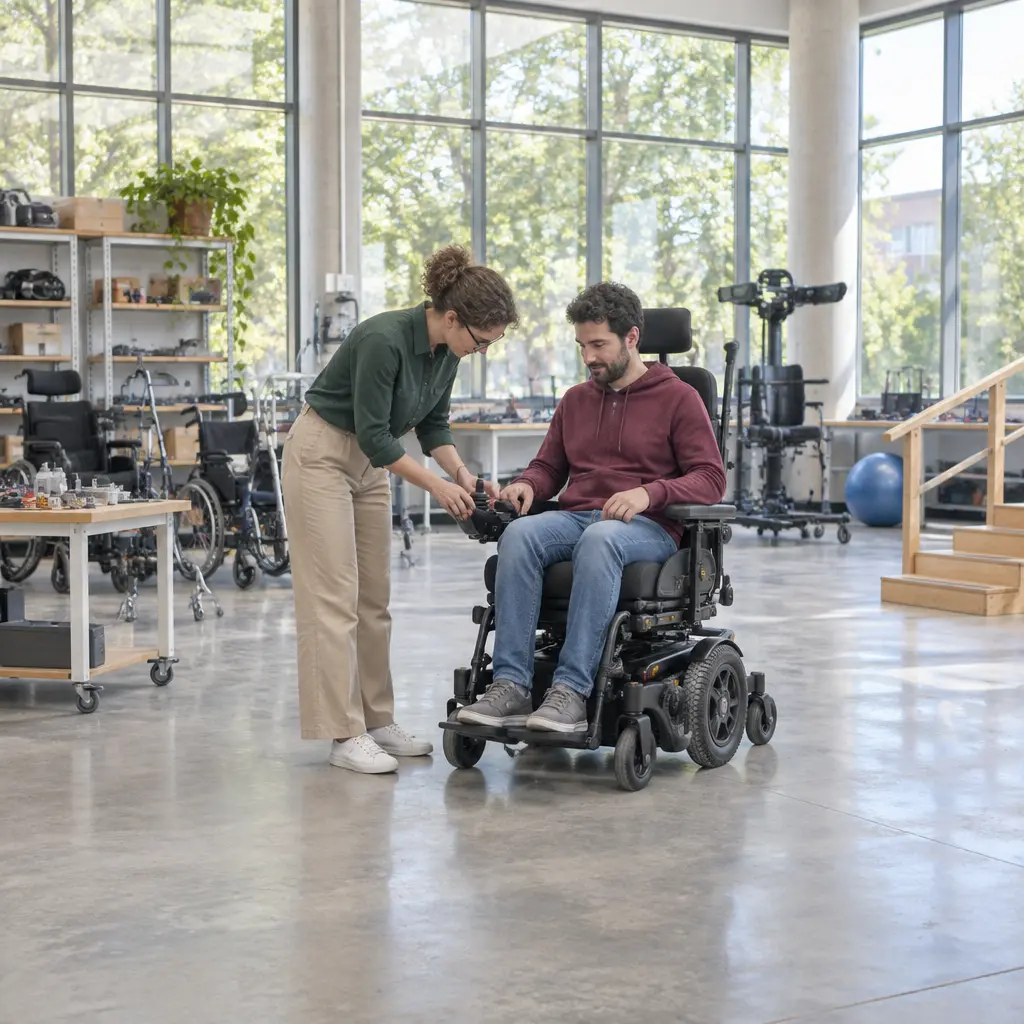
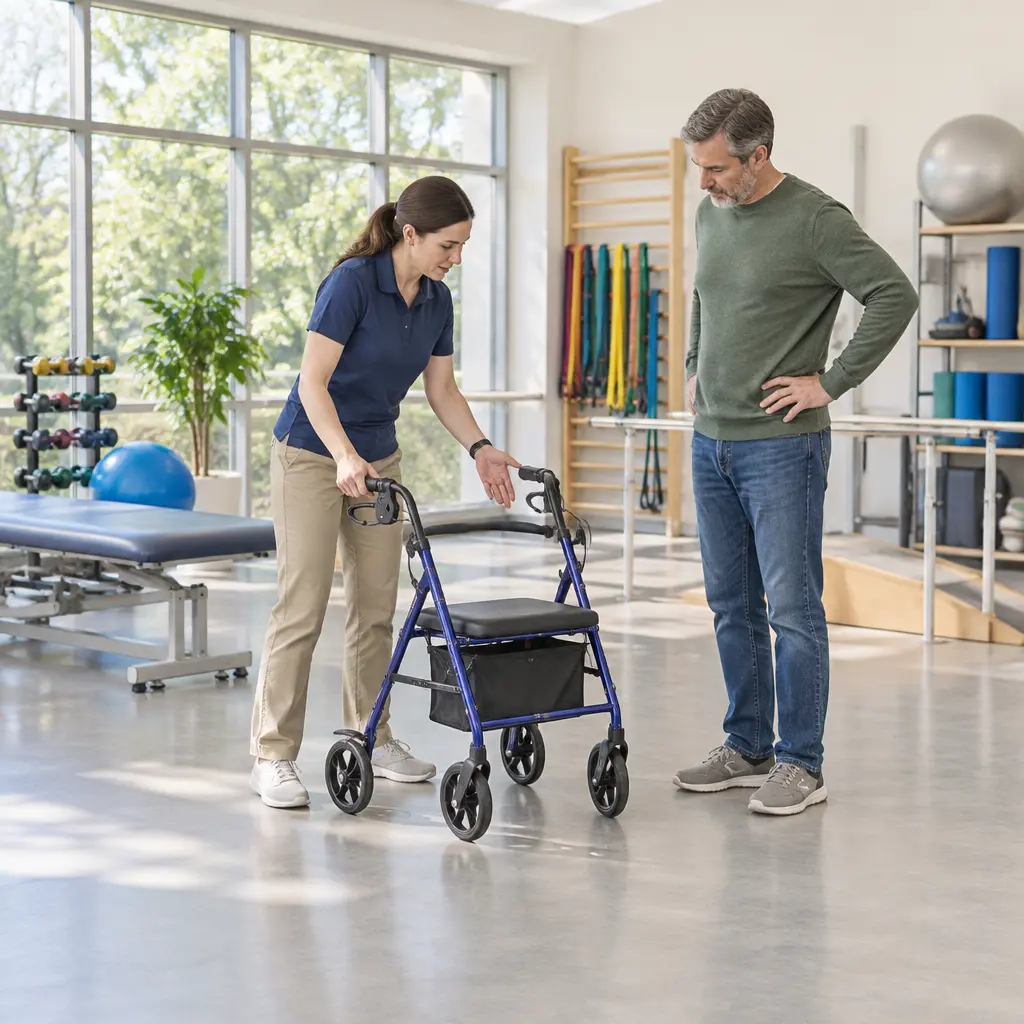
The primary beneficiaries are people living with temporary or long-term limitations associated with injury, illness, disability, or aging. A powered wheelchair may increase independent mobility; a communication device may help someone express choices; and a structured exercise application may support practice between appointments. The appropriate tool depends on an individual’s goals, abilities, environment, and preferences. A device that works in a clinic may not be useful at home if it is difficult to operate, uncomfortable, or incompatible with daily routines.
Potential users include people recovering from stroke or surgery, people with spinal cord or brain injuries, and people with sensory, developmental, or musculoskeletal conditions. The World Health Organization identifies rehabilitation as relevant across the life course and across health conditions. Technology can support restoration of function, compensation for a lasting impairment, or prevention of further decline, but it does not guarantee recovery.
Assistive products support independence in everyday life
Assistive technology includes products and systems that help people maintain or improve functioning and independence. Examples range from glasses, hearing aids, and mobility aids to communication software and adapted household equipment. The WHO and UNICEF Global Report on Assistive Technology emphasizes that access depends not only on the product itself, but also on services such as assessment, fitting, user training, and repair.
This distinction matters: providing a device without ongoing support can leave a person with equipment that is poorly matched or unusable. A wheelchair, for instance, may require individualized seating, adjustments as needs change, and access to repairs. Timely provision can support participation at school, work, and in the community, while delays or unsuitable equipment can restrict it.
Caregivers and families may benefit when technology reduces barriers
Family members and other unpaid caregivers may benefit when a person can perform more tasks independently or when technology makes care safer and easier to coordinate. Transfer aids, medication reminders, accessible communication tools, and remote monitoring may reduce some practical demands. However, technology can also create new work: caregivers may need to learn setup and troubleshooting, manage alerts, or help with maintenance. Benefits therefore depend on whether the product is designed around both the user’s autonomy and the realities of caregiving.
Clinicians and rehabilitation teams gain tools, not replacements
Rehabilitation professionals—including physical and occupational therapists, speech-language pathologists, rehabilitation physicians, nurses, and prosthetics specialists—can use technology to measure performance, deliver practice, and tailor interventions. Sensors may track movement; virtual-reality systems can create repeatable practice environments; and telehealth can connect clinicians with people who face travel barriers. These tools can complement clinical judgment, but they do not replace assessment, therapeutic relationships, or professional oversight.
The U.S. National Institute on Deafness and Other Communication Disorders, for example, describes hearing aids as devices that make sounds louder and clearer for many people with hearing loss, while noting that they do not restore normal hearing. This illustrates a general principle: rehabilitation technologies can improve access or function without removing the underlying condition, and outcomes vary among users.
Rehabilitation technology can benefit health systems and communities
Individual gains can have wider effects when technologies support care beyond specialist settings or help people participate in education, employment, and community life. These gains are not automatic: they depend on evidence, equitable access, appropriate reimbursement, and services that connect devices to ongoing rehabilitation.
Digital rehabilitation can extend access when it is accessible
Digital rehabilitation includes telehealth visits, mobile applications, online exercise programs, and remote monitoring. It may help people who live far from clinics, have limited transportation, or need support between in-person appointments. A 2021 Cochrane review of telerehabilitation after stroke found that available evidence suggested telerehabilitation may achieve outcomes similar to face-to-face rehabilitation for some measures, though certainty and results varied by intervention and outcome. It should therefore be selected according to clinical needs rather than treated as a universal substitute for in-person care.
Digital access also has limits. Reliable internet, suitable devices, digital literacy, language access, privacy, and accessible design all affect who can participate. Hybrid care—combining remote and in-person support—may be more suitable for some people, particularly when hands-on assessment, equipment fitting, or close monitoring is necessary.
Health systems may gain continuity and more flexible service delivery
Health systems can use technology to coordinate care, support home practice, and collect information about progress. Remote sessions may reduce travel burdens and allow clinicians to reach people who otherwise face long waits or distance barriers. These advantages should be evaluated alongside costs for equipment, software, staff training, technical support, data security, and repairs. A lower-cost virtual visit is not necessarily cost-effective if it leads to missed needs or requires substantial unpaid labor from families.
The World Health Organization’s Rehabilitation 2030 initiative calls for rehabilitation to be integrated into health systems and made available across levels of care. Technology can help with that goal, but it works best as part of a service pathway that includes referral, assessment, provision, follow-up, and outcome review.
Employers and communities may benefit from greater participation
When rehabilitation technology helps someone communicate, move around, or perform tasks, it may support participation in school, work, family life, and public spaces. Accessible devices and environments can also reduce barriers for other people, including older adults and people with temporary injuries. These social benefits depend on inclusive design and accommodations; a person cannot benefit fully from a mobility device if buildings, transport, or workplaces remain inaccessible.
The benefits depend on access, fit, and evidence
Technology can widen disparities if it is expensive, difficult to obtain, designed without disabled users, or unsupported by repair and training services. The WHO and UNICEF report highlights a substantial global access gap for assistive products. The figure of nearly one billion people without access underscores that innovation alone does not ensure benefit: distribution, affordability, workforce capacity, and local infrastructure matter.
Person-centered selection improves the chance of useful outcomes
Person-centered selection begins with the user’s own priorities and context. Assessment should consider functional goals, physical and cognitive abilities, communication needs, home and work environments, cultural preferences, and the person’s willingness to use the product. Trials and follow-up can identify whether a device is effective in real-world settings and whether adjustments are needed.
Training, maintenance, and affordability determine sustained use
A technology’s benefit can diminish if users are not taught how to use it or cannot obtain repairs, replacement parts, batteries, connectivity, or software support. Programs should plan for the full life cycle of a product, including fitting, instruction, follow-up, and replacement when needs change. Coverage and payment policies also influence whether people can obtain appropriate equipment without undue financial burden.
Evidence should measure outcomes that matter to users
Evaluation should look beyond whether a device functions as designed. Relevant outcomes include safety, comfort, independence, participation, sustained use, quality of life, and the time or effort required from users and caregivers. Researchers and service providers should also examine who is missing from studies and whether findings apply across ages, disabilities, languages, and socioeconomic circumstances.
Conclusion: rehabilitation technology benefits people when systems support its use
Rehabilitation technology can benefit people receiving care by supporting function, independence, and participation; families by easing some care tasks; clinicians by extending assessment and practice options; and health systems and communities by helping services reach more people. Assistive products, therapeutic devices, and digital rehabilitation each offer different possibilities, but none guarantees an outcome on its own.
The broader implication is that access must include more than distribution: people need appropriate assessment, informed choice, training, maintenance, affordability, and accessible environments. Policymakers, providers, and technology developers should involve users in design and evaluation, track meaningful outcomes, and address gaps in access. For further reading, consult the World Health Organization’s global reports on rehabilitation and assistive technology and the WHO-UNICEF report on assistive technology.
Sources: World Health Organization, Rehabilitation, https://www.who.int/news-room/fact-sheets/detail/rehabilitation; World Health Organization, Global Report on Assistive Technology, 2022, https://www.who.int/publications/i/item/9789240049451; World Health Organization and UNICEF, Global Report on Assistive Technology, 2022, https://www.who.int/publications/i/item/9789240049451; World Health Organization, Rehabilitation 2030: A Call for Action, https://www.who.int/initiatives/rehabilitation-2030; Laver et al., Telerehabilitation Services for Stroke, Cochrane Database of Systematic Reviews, 2020, https://doi.org/10.1002/14651858.CD010255.pub3; National Institute on Deafness and Other Communication Disorders, Hearing Aids, https://www.nidcd.nih.gov/health/hearing-aids