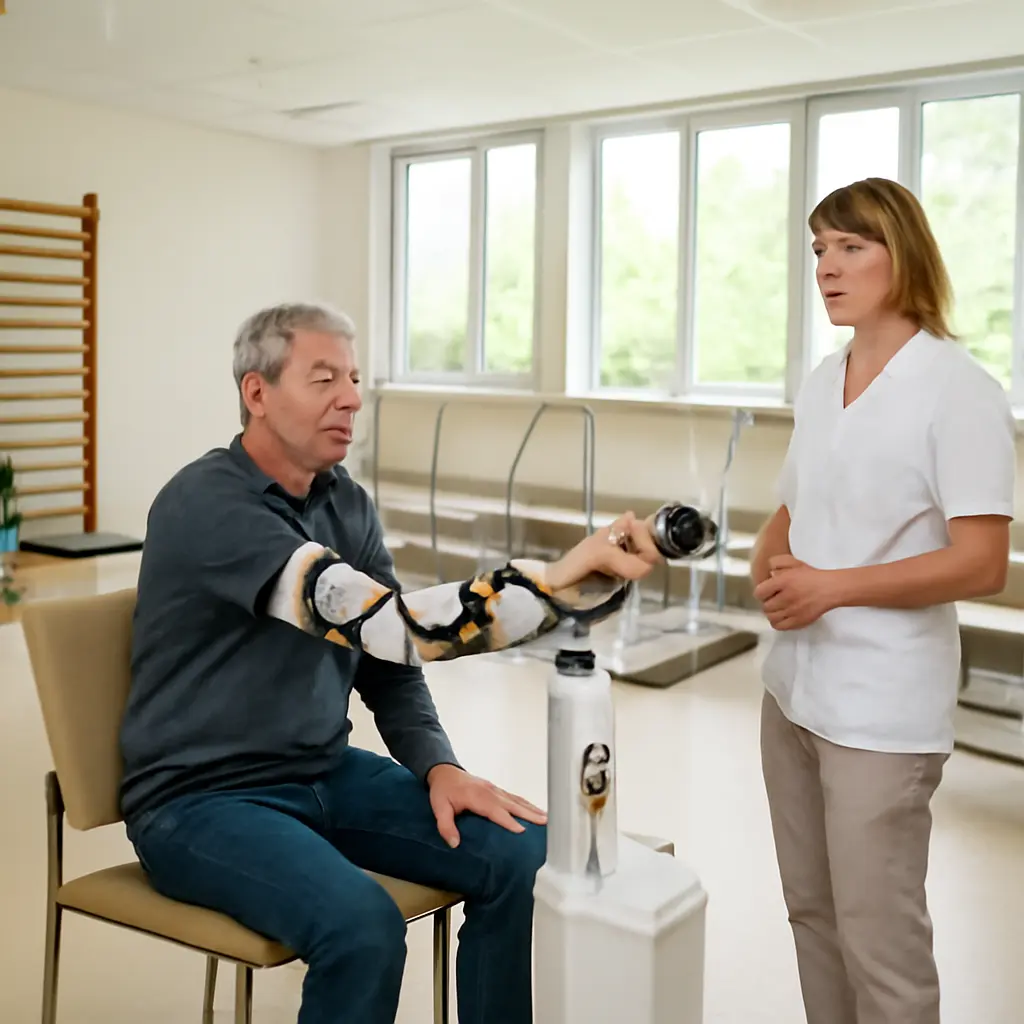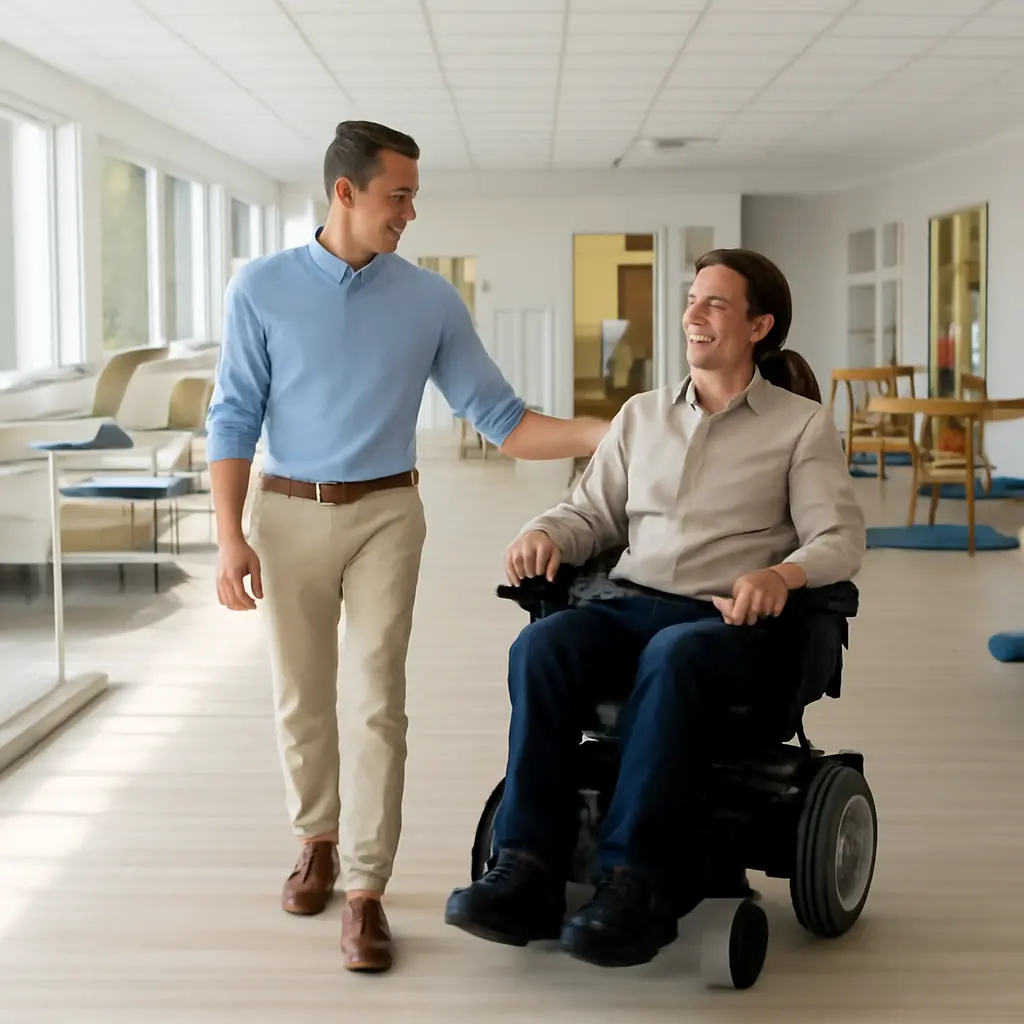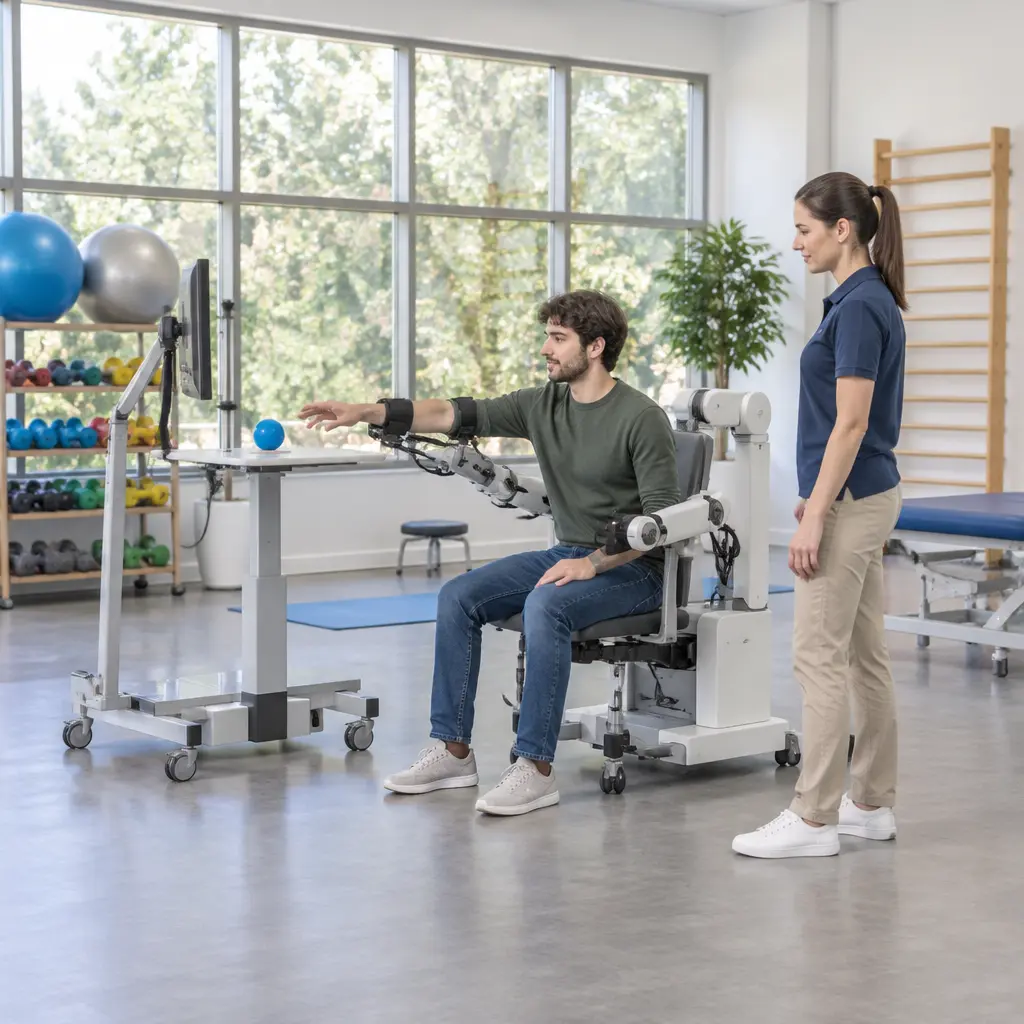
Robotic rehabilitation uses computer-controlled devices to help people practice movements affected by stroke. Its potential benefits include high-repetition, task-specific training; adjustable assistance; measurable feedback; and support for arm, hand, and walking practice. These tools can make therapy more intensive and trackable, but they complement—not replace—clinical expertise and individualized rehabilitation. The World Health Organization estimates that 1 in 4 adults will experience a stroke during their lifetime, underscoring the importance of accessible, evidence-informed recovery services.
Robotic Rehabilitation Benefits Stroke Recovery Through Repetitive, Task-Specific Practice
Robotic rehabilitation is the use of powered or sensor-guided devices to assist, resist, or measure movement during therapy. The American Heart Association and American Stroke Association’s adult stroke rehabilitation guideline describes robotic therapy as one possible approach to upper-limb rehabilitation, while emphasizing that it should be selected as part of a broader, individualized program. Devices include end-effector robots, which guide a limb from a handle or footplate; exoskeletons, which align with and move joints; and wearable gait systems.
The benefits below are best understood as ways to deliver or support rehabilitation—not guaranteed outcomes. Research findings vary according to the device, treatment dose, stroke severity, recovery stage, and comparison therapy. A Cochrane review of electromechanical and robot-assisted arm training found that it may improve activities of daily living, arm function, and arm strength, but noted that results across trials were not uniform.
1. More Repetitions of Goal-Directed Movement
Robots can help a person complete repeated reaching, grasping, stepping, or walking movements. Repetition matters because recovery practice needs to engage the affected movement in a meaningful way; a device can support movement when weakness or fatigue makes independent practice difficult. In a 2018 Cochrane review of 45 trials involving 1,619 participants, robot-assisted arm training was associated with improvements in arm function and strength, though the size and clinical importance of benefit differed among studies.
For example, a therapist might use a robotic arm device to let a patient practice reaching toward targets, then gradually reduce assistance as control improves. Repetition alone is not a substitute for purposeful tasks: practice should be linked to goals such as reaching a shelf or bringing a cup to the mouth.
2. Assistance That Can Be Adjusted to the Patient
Many rehabilitation robots operate in an assist-as-needed mode: they provide more help when a patient cannot complete a movement and less when the patient can contribute more. This can allow practice at an appropriate level of challenge while avoiding the assumption that every person needs the same amount of support.
Clinicians can adjust movement range, speed, resistance, or the amount of assistance according to a person’s abilities and safety needs. This flexibility is useful across different stages of recovery, but device settings must be supervised and reviewed by qualified rehabilitation professionals.
Robotic Rehabilitation Benefits Stroke Recovery Through Feedback and Measurable Progress
Once practice is tailored, feedback can help patients and clinicians understand how movement is changing. Sensors in robotic systems can record details such as range of motion, movement speed, repetitions, and force. These measures may complement clinical assessments; they do not, on their own, establish that a person has regained useful everyday function.
3. Immediate Feedback During Practice
Feedback is information about performance delivered during or after an activity. Depending on the device, it may be visual, auditory, or tactile, showing whether a movement reached a target or how much assistance was needed. The immediate information can help a therapist adjust the task and help the patient notice movement that may otherwise be difficult to feel or see.
Feedback should be meaningful rather than overwhelming. The American Heart Association and American Stroke Association stress individualized, task-focused rehabilitation; robotic displays are most useful when they support a relevant functional goal and are interpreted alongside the patient’s performance outside the device.
4. Objective Tracking of Training and Change
Objective tracking means recording movement and training data in a consistent format. A robot may document the number of repetitions, distance traveled, joint movement, or assistance provided. This record can help clinicians compare sessions, spot plateaus, and discuss progress with patients and families.
The National Clinical Guideline for Stroke for the UK and Ireland recommends goal-directed, repetitive, task-specific practice as part of rehabilitation. Robotic measurements can support that approach, but should be considered alongside established assessments of arm function, walking, self-care, fatigue, and participation in daily life.
Robotic Rehabilitation Benefits Stroke Recovery Across Arm and Walking Practice
Robotic systems are used for different rehabilitation tasks, so the device should match the movement goal. Upper-limb devices address reaching and arm control; gait systems focus on stepping and walking. Neither category is appropriate for every patient, and a therapist must consider balance, cognition, sensation, medical status, and the person’s preferences.
5. Structured Practice for Arm and Hand Function
Arm and hand robots guide or support movements such as shoulder reaching, elbow extension, wrist movement, and grasp-and-release practice. Some systems use an end-effector attached to the hand or forearm; others use an exoskeleton aligned with specific joints. These devices can make repeated upper-limb practice possible for people who have difficulty moving against gravity.
A 2020 systematic review and meta-analysis in the Journal of NeuroEngineering and Rehabilitation examined robot-assisted upper-limb rehabilitation and reported potential improvements in motor function, while highlighting variation in intervention design and study quality. Functional transfer still matters: gains on a device should be followed by practice using real objects and everyday tasks.
6. Supported Gait and Walking Practice
Gait robots include treadmill-based systems with body-weight support and wearable exoskeletons that assist stepping. They can help patients practice components of walking under controlled conditions, with clinicians monitoring alignment, balance, endurance, and safety. The goal is not simply to complete steps on a machine but to improve mobility that carries over to standing, transfers, and walking in real environments.
The 2020 Cochrane review of electromechanical-assisted training for walking after stroke included 62 studies with 2,440 participants. It found that combining this training with physiotherapy may increase the likelihood of independent walking, particularly for people who are non-ambulatory early after stroke; the authors also noted that effects varied and should be interpreted in the context of each person’s needs.
Robotic Rehabilitation Benefits Stroke Recovery Through Engagement and Therapy Planning
The final benefits concern how robotic sessions fit into a sustainable rehabilitation plan. Devices can make practice interactive and provide a structured way to deliver exercises, but access, comfort, staffing, and transfer to daily activities determine whether that potential becomes meaningful progress.
7. Interactive Practice That Can Support Participation
Some robotic systems present exercises as games or target-based challenges, offering immediate scores or visual cues. This format may make repetitive practice more engaging for some patients and can provide clear short-term goals. Engagement varies from person to person, however, and a game should not replace therapeutic judgment or a patient’s own priorities.
A practical example is a reaching program in which a patient moves a cursor to targets using an affected arm. The task can be adjusted as control changes, then paired with real-world reaching practice. Clinicians should check whether the activity is comfortable, motivating, and connected to useful skills rather than relying on scores alone.
Choosing Robotic Rehabilitation Safely
Robotic rehabilitation is a treatment option, not a universal prescription. Before starting, the rehabilitation team should explain the intended goal, expected benefits and limitations, alternatives, session demands, and any device-specific risks. They should also monitor pain, skin pressure, fatigue, joint alignment, and cardiovascular tolerance where relevant.
- Ask which daily activity or movement goal the device is intended to support.
- Discuss how progress will be measured beyond device scores.
- Confirm that robotic sessions are integrated with occupational therapy, physical therapy, and home practice as appropriate.
- Review comfort, safety, and access needs regularly with the clinical team.
Conclusion: Robotic Rehabilitation Can Support Individualized Stroke Recovery
Robotic rehabilitation may support stroke recovery by enabling repeated, adjustable movement practice; providing feedback and objective tracking; and assisting arm, hand, and walking exercises. Interactive tasks can also help some people participate in therapy. Evidence suggests potential benefits, but outcomes depend on the person, the device, and how training is integrated with broader, goal-directed care.
If you or someone you support is considering robotic therapy, ask a stroke rehabilitation professional whether it fits the person’s goals and how progress will be assessed in everyday activities. For further reading, consult stroke rehabilitation guidance from the American Heart Association and American Stroke Association, the Cochrane reviews on arm and walking training, and national clinical guidelines.
Sources: World Health Organization, “One in four people globally will have a stroke in their lifetime,” https://www.who.int/news/item/29-10-2024-one-in-four-people-globally-will-have-a-stroke-in-their-lifetime; Winstein, C. J., et al., “Guidelines for Adult Stroke Rehabilitation and Recovery,” American Heart Association/American Stroke Association, 2016, https://www.ahajournals.org/doi/10.1161/STR.0000000000000098; Mehrholz, J., et al., “Electromechanical and robot-assisted arm training for improving activities of daily living, arm function, and arm muscle strength after stroke,” Cochrane Database of Systematic Reviews, 2018, https://doi.org/10.1002/14651858.CD006876.pub5; Mehrholz, J., et al., “Electromechanical-assisted training for walking after stroke,” Cochrane Database of Systematic Reviews, 2020, https://doi.org/10.1002/14651858.CD006185.pub5; National Clinical Guideline for Stroke for the UK and Ireland, 2023, https://www.strokeguideline.org/; Mehrholz, J., et al., “Electromechanical and robot-assisted arm training for improving arm function and activities of daily living after stroke,” Journal of NeuroEngineering and Rehabilitation, 2020, https://jneuroengrehab.biomedcentral.com/.