Rehabilitation technology is the collection of devices, software, and services that help people maintain, regain, or improve abilities affected by disability, injury, illness, or aging. For families, it can mean anything from a communication app or wheelchair to a robotic training system. The World Health Organization estimates that 2.5 billion people need one or more assistive products, a category that overlaps with rehabilitation technology. Understanding the options, how clinicians assess them, and how to plan for cost, training, and follow-up can help families make informed choices without assuming that a device alone will produce a particular outcome.
Rehabilitation technology supports function and participation
Rehabilitation technology is best understood as technology used within a broader rehabilitation process—not as a substitute for assessment, therapy, or personal support. The World Health Organization describes rehabilitation as interventions designed to optimize functioning and reduce disability in interaction with a person’s environment. In practice, rehabilitation technology may support communication, movement, self-care, learning, work, or participation in family and community life.
The terms assistive technology and rehabilitation technology are related but not identical. Assistive products help people perform tasks or participate; rehabilitation technology may also be used to practice skills, monitor progress, or deliver therapy. A product can serve both roles—for example, a powered mobility device can support daily access while also helping someone practice safe navigation.
The scale of need makes access a significant family and public-health concern. WHO and UNICEF’s 2022 Global Report on Assistive Technology estimates that more than 2.5 billion people need at least one assistive product and that this number may rise to 3.5 billion by 2050. These figures cover a broad range of products and do not represent rehabilitation devices alone, but they underscore why appropriate assessment, affordability, and ongoing support matter.
Assistive products and everyday access
Assistive products are devices or systems that help a person carry out activities or participate in daily life. Examples include wheelchairs, walkers, hearing aids, communication devices, adapted utensils, and screen-reading software. The right product depends on the person’s goals, abilities, environment, and preferences—not solely on a diagnosis. A device that works at home may need adjustment for school, public transport, or outdoor use.
Therapy and skills-practice technologies
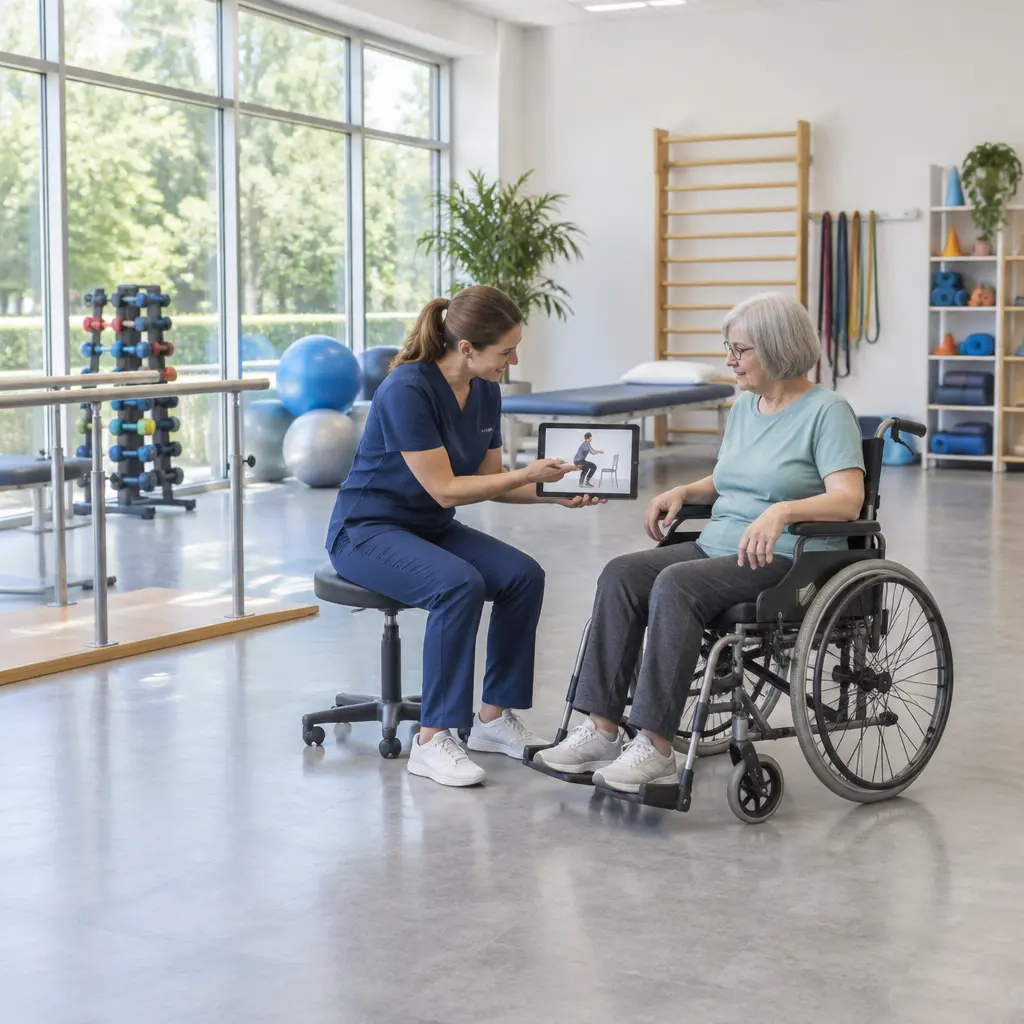
Some technologies are designed to support rehabilitation practice, such as interactive exercise systems, balance platforms, wearable movement sensors, or virtual-reality activities. They can provide repeated practice or feedback under professional guidance. Their usefulness depends on whether the activity matches the person’s goals and whether the system is safe and accessible. A technology’s novelty is not proof that it is more effective than a simpler approach.
Assessment matches rehabilitation technology to the person
A rehabilitation technology assessment is a structured process for identifying a functional need, choosing possible solutions, and checking whether a product works in the person’s real-life settings. The WHO’s assistive-technology guidance emphasizes that access involves more than supplying a product: appropriate assessment, fitting, training, maintenance, and follow-up are also important. Families can ask the rehabilitation team how recommendations connect to the person’s own priorities.
Goals, context, and user preferences
Assessment begins with what the person wants or needs to do, such as communicate with classmates, reach the bathroom safely, or participate in meal preparation. Clinicians may consider posture, strength, vision, hearing, cognition, fatigue, home layout, school or work demands, and caregiver routines. The person using the technology should be involved as much as possible; family members can contribute useful observations while keeping the user’s preferences central.
Trials, fitting, and training
A trial lets the user and team test a product before committing, where trials are available. Fitting may involve adjusting size, positioning, settings, or access methods. Training helps the user and family learn safe operation, care, and troubleshooting. For complex equipment, the team may also need to coordinate with a supplier, school, employer, or home-modification professional. Ask who is responsible for each step and how to arrange adjustments if the first setup does not work well.
Outcomes and reassessment
Useful outcomes are practical and person-specific: completing a task with less assistance, communicating more reliably, reducing effort, or participating in an activity that matters to the user. They should be reviewed over time because health, growth, routines, and environments can change. If a device is uncomfortable, unused, difficult to maintain, or no longer suited to the goal, tell the clinical team rather than assuming the user has failed to adapt.
Common rehabilitation technology categories address different needs
Technology choices range from low-cost adaptations to specialized equipment. A product should be selected for the task it is intended to support, with attention to compatibility, safety, and the person’s ability to use it. The categories below often overlap, and a single person may use several types of technology.
Mobility and positioning equipment
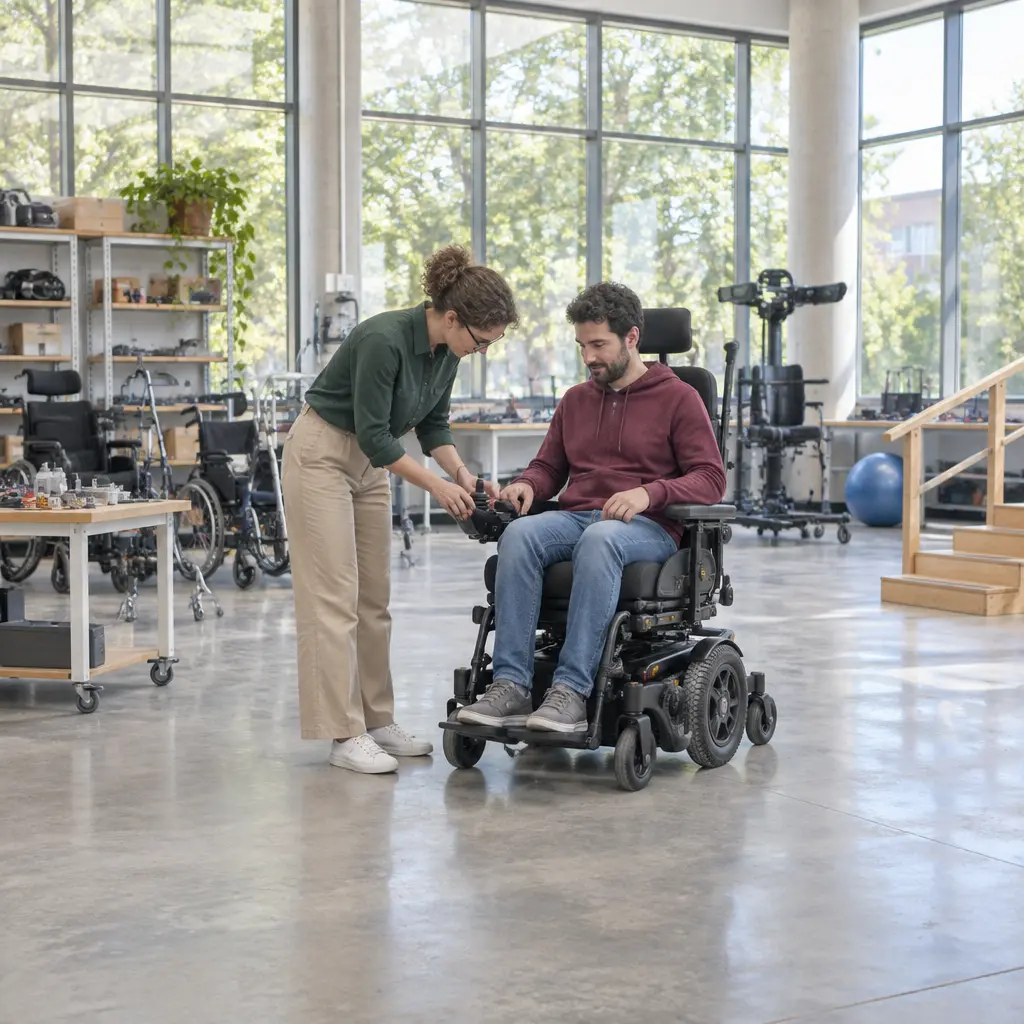
Mobility technology includes canes, walkers, manual and powered wheelchairs, and related seating or positioning supports. It may help with movement, access, stability, or maintaining a comfortable and functional posture. Families should ask about fitting, transfers, transport, charging or maintenance needs, and whether the device can be used in the person’s home and community environments.
Communication and sensory supports
Augmentative and alternative communication (AAC) includes methods and tools that supplement or replace speech, from picture boards and signs to speech-generating devices. Hearing and vision technologies can include hearing aids, alerting devices, magnification, and screen readers. These supports should reflect how the person communicates or accesses information across settings. For AAC in particular, a device is only one possible part of communication; consistent access and communication-partner support matter too.
Digital, wearable, and robotic systems
Digital rehabilitation may use apps, telehealth platforms, game-based exercises, or remote monitoring. Wearable sensors can record movement or activity, while robotic systems may assist with repeated movement practice in clinical or other supervised settings. These tools can help clinicians and users observe practice, but the data may not capture comfort, confidence, or participation on its own. Families should ask what information is collected, who can see it, how it will guide care, and what happens if the technology fails.
Home and daily-living adaptations
Daily-living technology includes adapted utensils, dressing aids, accessible switches, environmental controls, and bathroom or kitchen modifications. Some solutions are simple and inexpensive; others require professional assessment or installation. A therapist can help determine whether an adaptation fits the task and the person’s safety needs. Families should avoid making structural changes or using equipment in ways that could create a fall, transfer, or electrical hazard without appropriate advice.
Cost, access, and maintenance shape whether technology works
A device’s value depends partly on whether the family can obtain, use, and maintain it. Costs may include assessment, fitting, accessories, software subscriptions, repairs, batteries, training, and replacement as needs change. Coverage rules vary by country, insurer, product, and intended use, so families should request written information about eligibility, documentation, timelines, and appeal options before making major purchases.
Funding and service coordination
Ask the clinical team, supplier, school, or relevant public service which funding routes may apply and who submits required paperwork. In the United States, for example, coverage can depend on the program and whether an item meets its medical-necessity and benefit rules; a recommendation does not guarantee payment. If a device is used at school or work, ask how the equipment, training, and responsibilities will be coordinated across settings.
Repairs, safety, and changing needs
Families should know how to report a malfunction, obtain repairs, and access a backup plan when a device is essential. Keep product instructions, service contacts, fitting details, and warranty information together. Follow manufacturer and clinician guidance for cleaning, charging, storage, and safe use. Reassessment may be needed after growth, surgery, a change in function, or a move to a different home, school, or job.
Privacy and digital accessibility
Connected devices and apps may collect personal or health-related information. Before use, review privacy settings, data-sharing terms, account access, and whether the technology can be used without a paid subscription or reliable internet. Ask whether the interface is accessible to the intended user and what alternatives exist if the software changes or service ends.
Families can make informed choices with a practical plan
Families do not need to become technology experts to participate meaningfully. A clear goal, a chance to test options, and an agreed follow-up plan can make conversations with clinicians and suppliers more productive. The following questions can help organize those discussions:
- What daily activity or participation goal is this technology intended to support?
- What simpler or lower-cost options should we consider, and can we trial the recommended product?
- Who will fit the device and train the user and family?
- How will we know whether it is helping, and when will the team review it?
- What are the full costs, coverage requirements, repair arrangements, and backup options?
- Does the user find it comfortable, understandable, and acceptable in everyday settings?
- For connected products, what data are collected and how are they protected?
For example, a child who has difficulty communicating at school might be assessed for AAC with input from the child, family, speech-language pathologist, and school team. A trial could compare a low-tech communication board with a speech-generating option across classroom and home routines. The family and team could then review whether the child can access the system, whether communication partners know how to support it, and whether the approach helps with the child’s chosen communication goals. This illustrates why matching, practice, and follow-up are as important as the device itself.
Conclusion: rehabilitation technology works best with people-centered support
Rehabilitation technology includes assistive products, therapy tools, communication and sensory supports, mobility equipment, digital systems, and everyday adaptations. Its usefulness depends on a good match between the person, the task, and the environment—along with appropriate fitting, training, funding, maintenance, and reassessment. With billions of people worldwide needing assistive products, equitable access is an important health and participation issue. Families can start by identifying a meaningful goal, involving the technology user in decisions, and asking the care team about trials and long-term support. For further guidance, consult a rehabilitation professional and the relevant national or local assistive-technology service.
Sources: World Health Organization, Rehabilitation, https://www.who.int/news-room/fact-sheets/detail/rehabilitation; World Health Organization and UNICEF, Global Report on Assistive Technology, 2022, https://www.who.int/publications/i/item/9789240049451; World Health Organization, Assistive Technology, https://www.who.int/news-room/fact-sheets/detail/assistive-technology; World Health Organization, Priority Assistive Products List, https://www.who.int/publications/i/item/priority-assistive-products-list