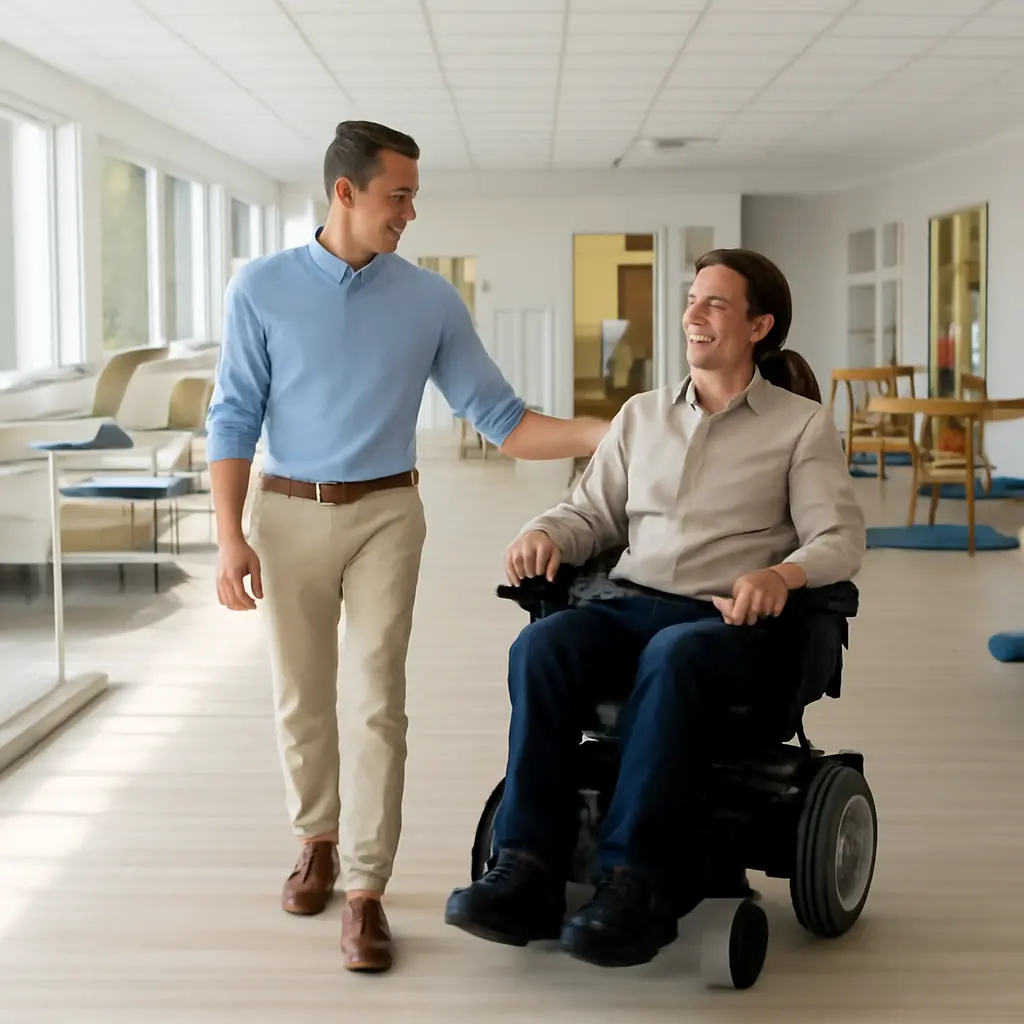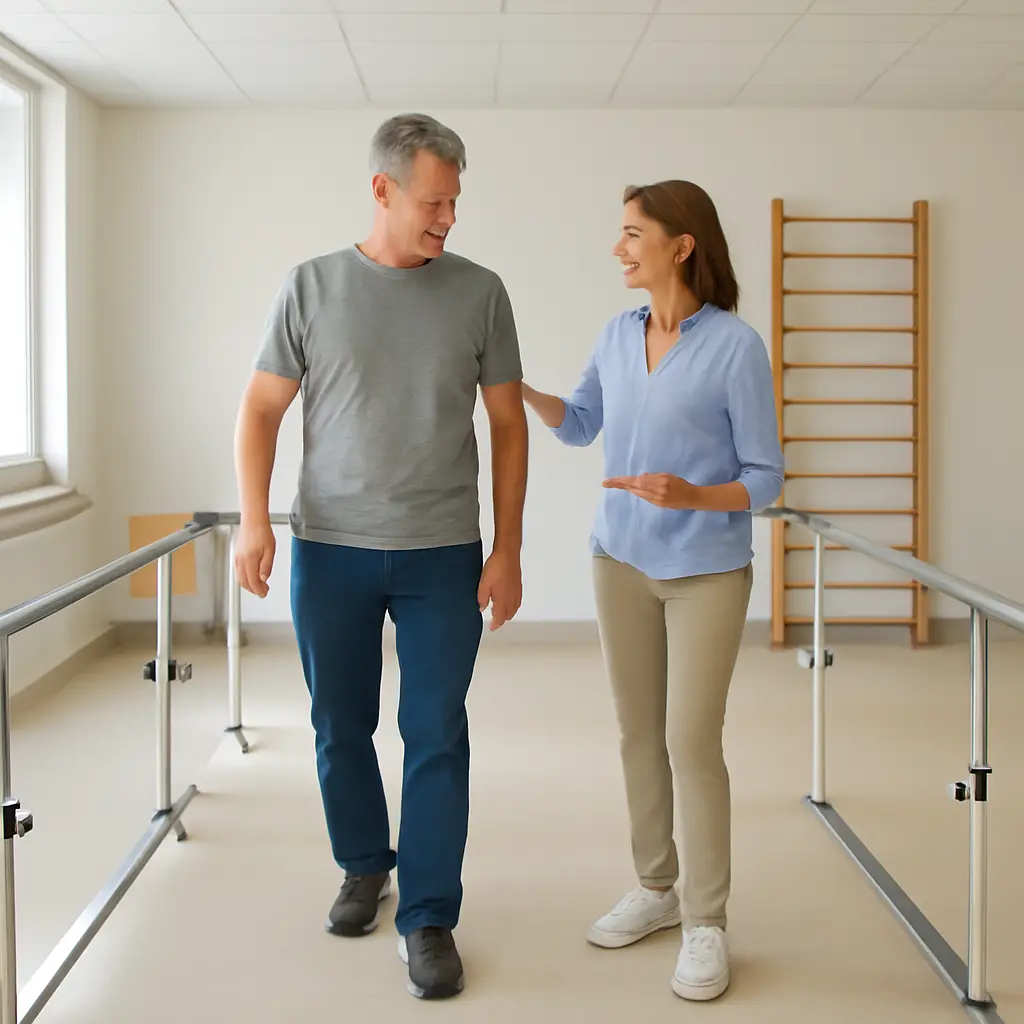
Rehabilitation robotics is the use of robotic systems to support assessment, movement practice, and functional recovery for people with disability or injury. The leading trends likely to shape the field in 2027 are more personalized, sensor-guided therapy; wearable and soft exosuits; AI-assisted adaptation; home and community-based rehabilitation; and stronger evidence for safety, accessibility, and real-world benefit. These directions build on a substantial need: the World Health Organization estimates that 2.4 billion people worldwide live with a health condition that may benefit from rehabilitation. Because 2027 is still in the future, the trends below are evidence-based projections—not claims that every technology will be widely available by then.
Personalized therapy defines rehabilitation robotics in 2027
Personalized rehabilitation robotics means adapting a device’s assistance, resistance, movement range, or feedback to an individual’s abilities and goals. In its clinical practice guideline for locomotor function after stroke, the American Physical Therapy Association describes electromechanical and robotic-assisted gait training as one tool that can be combined with conventional therapy; it does not define robotics as a replacement for therapist-led care. That distinction matters: a robot can deliver repeatable practice, while clinicians select appropriate tasks, interpret performance, and adjust the care plan.
The central shift is from fixed-dose machine sessions toward therapy that responds to a person’s performance. Relevant measures may include movement speed, range, symmetry, force, assistance required, fatigue, and task completion. The 2023 National Clinical Guideline for Stroke in the United Kingdom similarly emphasizes individualized, repetitive, task-specific practice. By 2027, the most useful systems are likely to be those that make such practice measurable and adjustable without obscuring clinical judgment.
Assist-as-needed control
Assist-as-needed control provides only as much robotic help as a user needs to complete a movement. A controller may increase support when performance falls below a target and reduce it when the person can contribute more effort. This approach is intended to preserve active participation rather than move a limb passively through a preset trajectory. It connects rehabilitation robotics with motor-learning principles, including repetition, feedback, and progressively challenging tasks.
The approach is promising but not a guarantee of better outcomes: appropriate assistance depends on the person, task, diagnosis, and stage of recovery. A 2020 Cochrane review of electromechanical-assisted gait training after stroke found that combining devices with physiotherapy increased the likelihood of achieving independent walking at the end of treatment, while effects varied by patient group and outcome. Its findings support targeted use rather than a one-size-fits-all prescription.
Sensor-guided and data-informed sessions
Sensor-guided rehabilitation uses encoders, force sensors, inertial measurement units, pressure sensors, or cameras to quantify movement and adjust training. These measurements can help a therapist track changes that may be difficult to estimate consistently by observation alone, such as limb timing or assistance levels. The most practical trend is likely to be interpretable feedback—clear measures linked to functional goals—rather than an overload of dashboards or opaque performance scores.
Data quality and clinical meaning remain essential. A device-generated measure is not automatically a validated measure of recovery, and performance in a controlled session may not translate to daily activity. In 2027, providers should ask whether a system’s metrics have been tested for reliability, whether they reflect meaningful goals, and how data are stored and shared.
Wearable exoskeletons expand rehabilitation robotics beyond the clinic
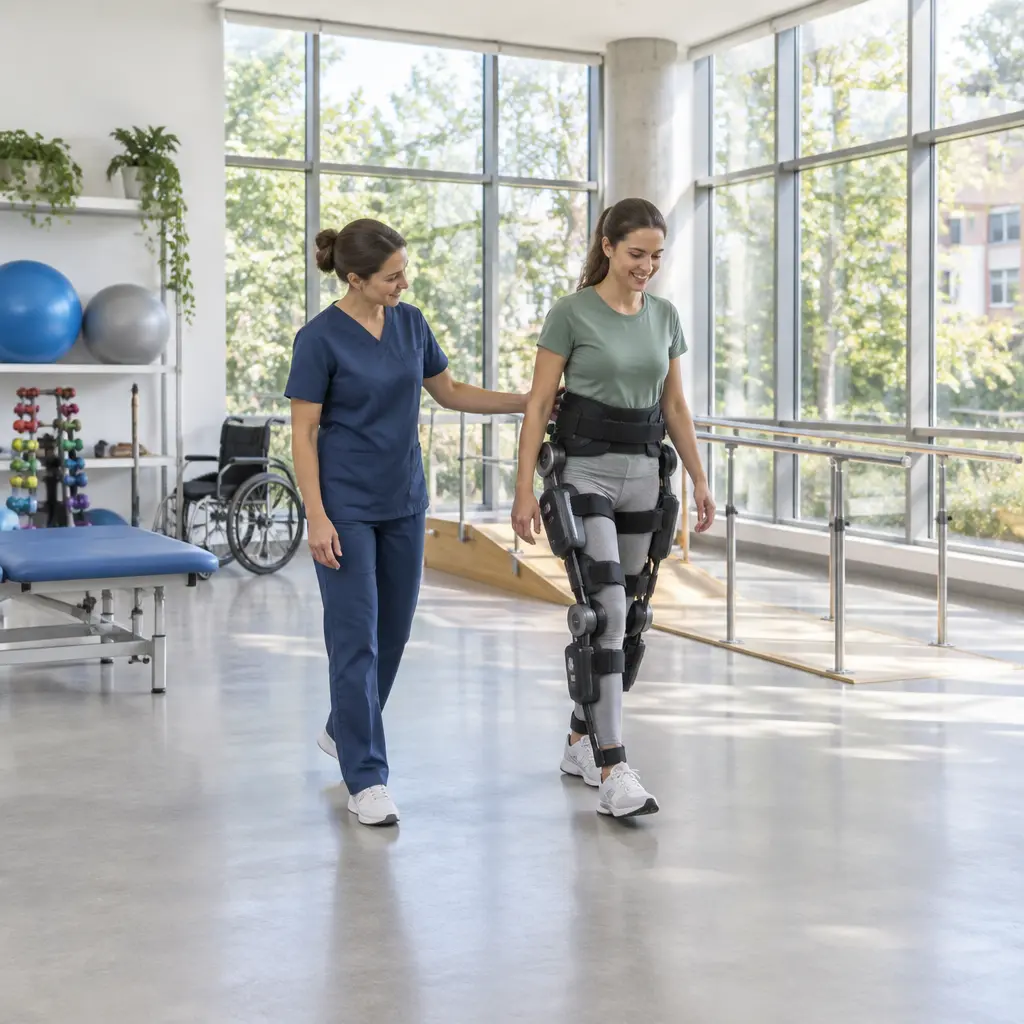
Wearable rehabilitation robots are body-worn devices that assist or resist movement, including powered exoskeletons, soft exosuits, and robotic orthoses. They differ from stationary gait-training systems because they can potentially support movement across a larger area or in daily environments. The U.S. Food and Drug Administration regulates powered lower-limb exoskeletons as medical devices for specific intended uses; clearance for one population or use should not be interpreted as proof of suitability for all users.
The move toward wearable systems responds to a practical challenge: access to repeated, task-specific practice can be limited by clinic time, staffing, transport, and equipment availability. Wearable robotics may widen opportunities, but safe fit, training, caregiver support, and the person’s ability to operate the device remain critical. Their adoption in 2027 will depend as much on usability and service models as on engineering performance.
Lower-limb exoskeletons and robotic gait training
Lower-limb exoskeletons are powered frames worn around the legs and torso to assist standing or walking. In rehabilitation, they may be used for supervised gait practice; some devices have separate indications for mobility in selected users. Clinical teams must assess factors such as bone health, joint range, skin integrity, balance, cardiopulmonary tolerance, and the capacity to follow safety instructions.
The evidence base is developing rather than definitive. The Cochrane stroke review reported potential benefit for walking independence when electromechanical gait training was added to physiotherapy, especially among people who were initially unable to walk. This supports careful patient selection and therapist oversight, not an assumption that an exoskeleton will restore independent walking for every person.
Soft exosuits and lightweight wearables
Soft exosuits use textiles, cables, and compact actuators rather than rigid frames to assist movement. Their potential advantages include lower weight, less restriction, and easier integration with clothing, although performance, durability, and fitting still require evaluation. Related wearable sensors can also monitor steps, joint motion, or activity outside a treatment session.
A notable research example is the 2019 Nature study by Jinsoo Kim and colleagues on a soft robotic suit designed to assist walking and reduce the metabolic cost of walking in healthy participants. The work illustrates how wearable assistance may extend beyond fixed laboratory equipment, but it is not evidence of clinical effectiveness across rehabilitation populations. In 2027, translation will hinge on trials with intended users, practical donning and doffing, and measurable improvement in daily function.
AI-assisted adaptation changes rehabilitation robotics control
AI-assisted rehabilitation robotics uses algorithms to interpret sensor data, recognize movement patterns, or help adjust device behavior. The term covers a range of methods, from machine-learning classifiers to adaptive control; it does not imply that a system can independently diagnose a patient or prescribe treatment. The likely near-term role is decision support and personalization under clinician supervision.
This trend follows the broader growth of medical AI, but rehabilitation presents specific challenges: movement varies across people and sessions, sensors can be noisy, and clinically meaningful outcomes may take time to emerge. The World Health Organization’s guidance on ethics and governance of artificial intelligence for health stresses human autonomy, transparency, accountability, and inclusiveness—principles that apply directly to robotic therapy software.
Adaptive assistance and movement recognition
Adaptive controllers can use measured effort or movement quality to alter assistance in real time. Movement-recognition algorithms may help a device distinguish an intended step from a pause or an unstable motion. These functions could make practice more responsive, but adaptation needs safeguards: the system should behave predictably, allow clinician override, and signal when data are uncertain.
For 2027 deployments, validation should include performance across varied body sizes, impairments, and movement patterns—not only results from a narrowly selected development sample. Providers should also examine whether software updates change device behavior and whether the manufacturer documents those changes in a way clinicians can review.
Digital twins and predictive rehabilitation
A digital twin in rehabilitation is a computational representation of a person or therapy process that is updated using data to explore or predict possible responses. In principle, it could help compare assistance settings or estimate how a person might respond to different training plans. For now, this is an emerging research direction, not a routine clinical standard.
Prediction should not be confused with proof. A model trained on one clinic’s patients may not generalize to another population, and predictions can reflect gaps in the underlying data. Any future clinical use should be tested prospectively and judged against patient-centered outcomes, such as safe transfers, walking in the community, or greater independence in daily activities.
Home-based rehabilitation robotics supports continuity of care
Home-based rehabilitation robotics refers to devices and connected services that support prescribed practice outside a hospital or rehabilitation center. Examples include compact upper-limb robots, sensor-equipped exercise systems, and remote monitoring paired with video consultations. This model may reduce travel barriers and help people continue practice, but it requires a plan for onboarding, technical support, safety, and escalation when symptoms or device problems arise.
The World Health Organization and UNICEF’s 2022 Global Report on Assistive Technology estimates that more than 2.5 billion people need at least one assistive product, with access gaps particularly severe in many low- and middle-income settings. Rehabilitation robots are not a substitute for the broader assistive-technology ecosystem, but the estimate underscores why affordability, availability, and appropriate support must be part of innovation.
Tele-rehabilitation and connected devices
Tele-rehabilitation combines remote clinical guidance with digital tools, which may include robotic or sensor-based equipment. A therapist can review progress, coach technique, and adjust goals while the person practices at home. Connected systems may transmit session summaries, but remote monitoring does not remove the need to assess the user’s home environment, emergency plan, and capacity to use the equipment safely.
The 2021 Cochrane review of telerehabilitation after stroke found that available evidence did not show clear differences from in-person rehabilitation for several outcomes, although certainty and study coverage varied. That finding is relevant to robotic home programs: remote delivery can be a useful option, but it should be selected according to individual needs, access, and clinical evidence rather than assumed equivalent in every circumstance.
Affordability, access, and inclusive design
Inclusive rehabilitation robotics is designed and delivered so people with different bodies, disabilities, incomes, languages, and levels of digital access can use it. Barriers include purchase and maintenance costs, broadband access, inaccessible interfaces, limited clinic staffing, and lack of reimbursement. A technically capable device may have little real-world effect if a person cannot obtain it, operate it, or receive repairs.
Manufacturers and health systems can address these issues through adjustable sizing, accessible controls, multilingual instructions, loan programs, service support, and evaluation across diverse user groups. In 2027, equity should be measured not only by device availability but also by who completes therapy and who benefits from it.
Evidence, safety, and outcomes shape rehabilitation robotics adoption
Clinical adoption depends on whether rehabilitation robots are safe, effective for an intended use, and workable within care systems. Regulatory clearance, engineering performance, and clinical benefit are related but distinct: a device’s authorization does not establish that it is superior to usual care or cost-effective in every setting. By 2027, stronger comparative studies and transparent reporting will be central to responsible adoption.
Evaluation should compare robotic therapy with relevant alternatives, describe the amount and content of practice, and report outcomes that matter to patients. These can include independence, participation, comfort, fatigue, adverse events, and sustained function—not just the number of repetitions completed.
Clinical evidence and meaningful outcomes
A useful clinical trial asks whether a robotic intervention adds value to appropriate rehabilitation, for whom, and under what conditions. The American Physical Therapy Association’s stroke guideline and the Cochrane review both place robotic or electromechanical gait training within a wider rehabilitation plan. This reflects the field’s move toward targeted use based on patient characteristics and treatment goals.
A key evidence gap is translation from improvement on a device to improvement in daily life. Studies should follow people beyond the treatment period and assess whether gains affect mobility, self-care, participation, or caregiver burden. A chart accompanying this article could compare outcomes by device type—such as gait independence, walking speed, and adverse events—but only when study populations and measures are sufficiently comparable.
Safety, human factors, and cybersecurity
Human-factors engineering examines how people interact with a device, including setup, fit, alarms, controls, and foreseeable errors. In rehabilitation robotics, safety considerations include falls, skin pressure, joint stress, device malfunction, and incorrect assistance. Training and supervision should match the user’s abilities and the device’s intended use.
Connected robots also create cybersecurity and privacy responsibilities. Health systems should assess access controls, data minimization, secure updates, and incident response. Consistent with WHO guidance on AI for health, organizations should preserve human oversight and explain how automated recommendations influence care.
Conclusion: rehabilitation robotics in 2027 will be more connected and individualized
The strongest projected trends for 2027 are individualized, sensor-guided therapy; wearable exoskeletons and soft exosuits; AI-assisted adaptation; home-based and tele-rehabilitation models; and closer scrutiny of evidence, safety, and equity. Together, these developments could make repetitive practice more measurable and accessible, but technology alone does not ensure recovery. Clinical expertise, patient goals, validated outcomes, affordability, and ongoing support remain essential.
For clinicians and health-system leaders, the practical next step is to evaluate devices against specific patient needs and independently reviewed evidence, then monitor outcomes in routine practice. Researchers should prioritize diverse participants and real-world function, while prospective users can ask about intended use, training, costs, maintenance, and data privacy. Rehabilitation robotics is most valuable when it strengthens—not substitutes for—person-centered care.
Sources: World Health Organization, Rehabilitation, https://www.who.int/news-room/fact-sheets/detail/rehabilitation; American Physical Therapy Association, Clinical Practice Guideline to Improve Locomotor Function Following Chronic Stroke, https://www.apta.org/patient-care/evidence-based-practice-resources/cpgs/locomotor-function-following-chronic-stroke; National Institute for Health and Care Excellence, National Clinical Guideline for Stroke for the UK and Ireland, 2023, https://www.strokeguideline.org/; Mehrholz J, Thomas S, Werner C, et al., Electromechanical-assisted training for walking after stroke, Cochrane Database of Systematic Reviews, 2020, https://doi.org/10.1002/14651858.CD006185.pub5; U.S. Food and Drug Administration, Powered Exoskeletons, https://www.fda.gov/medical-devices/general-hospital-devices-and-supplies/powered-exoskeletons; Kim J, Lee G, Heimgartner R, et al., Reducing the metabolic rate of walking and running with a versatile, portable exosuit, Nature, 2019, https://doi.org/10.1038/s41586-019-1889-8; World Health Organization, Ethics and Governance of Artificial Intelligence for Health, 2021, https://www.who.int/publications/i/item/9789240029200; World Health Organization and UNICEF, Global Report on Assistive Technology, 2022, https://www.who.int/publications/i/item/9789240049451; Laver KE, Adey-Wakeling Z, Crotty M, et al., Telerehabilitation services for stroke, Cochrane Database of Systematic Reviews, 2020, https://doi.org/10.1002/14651858.CD010255.pub3.