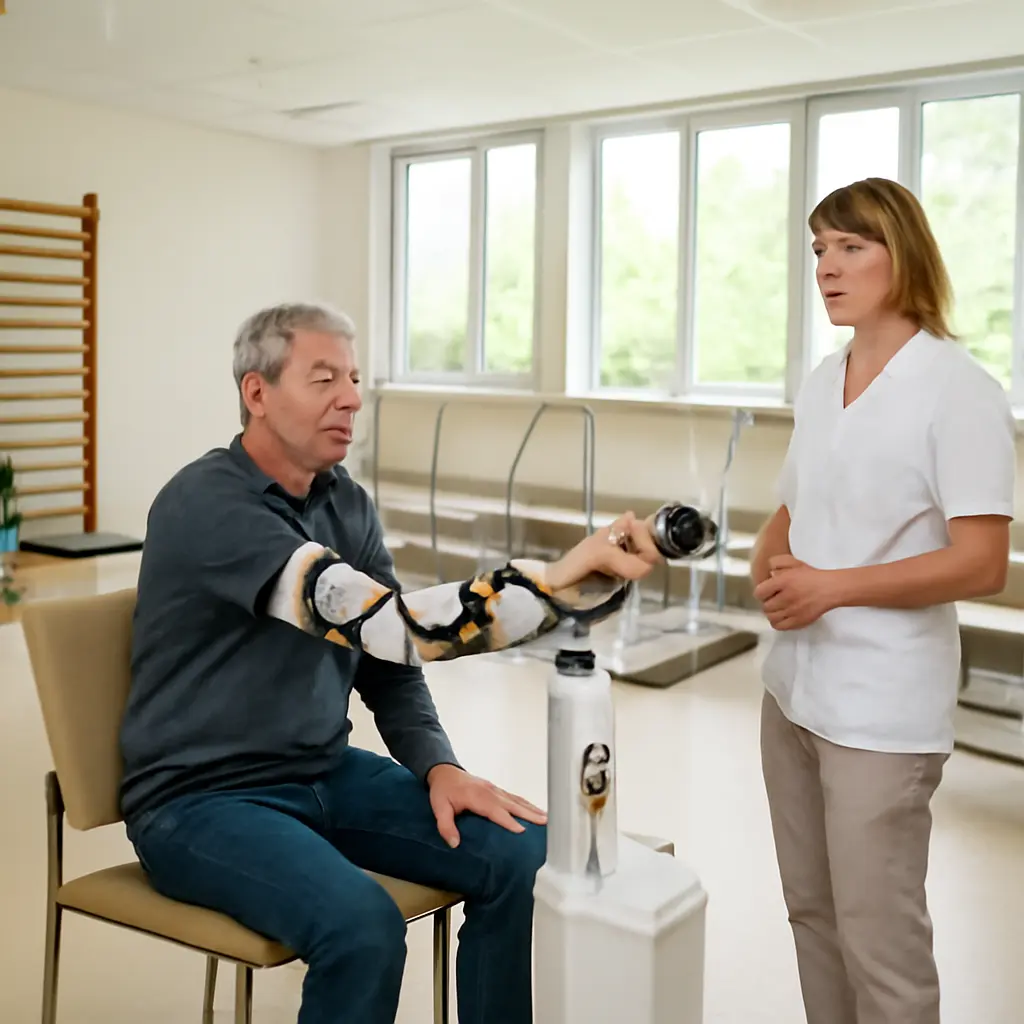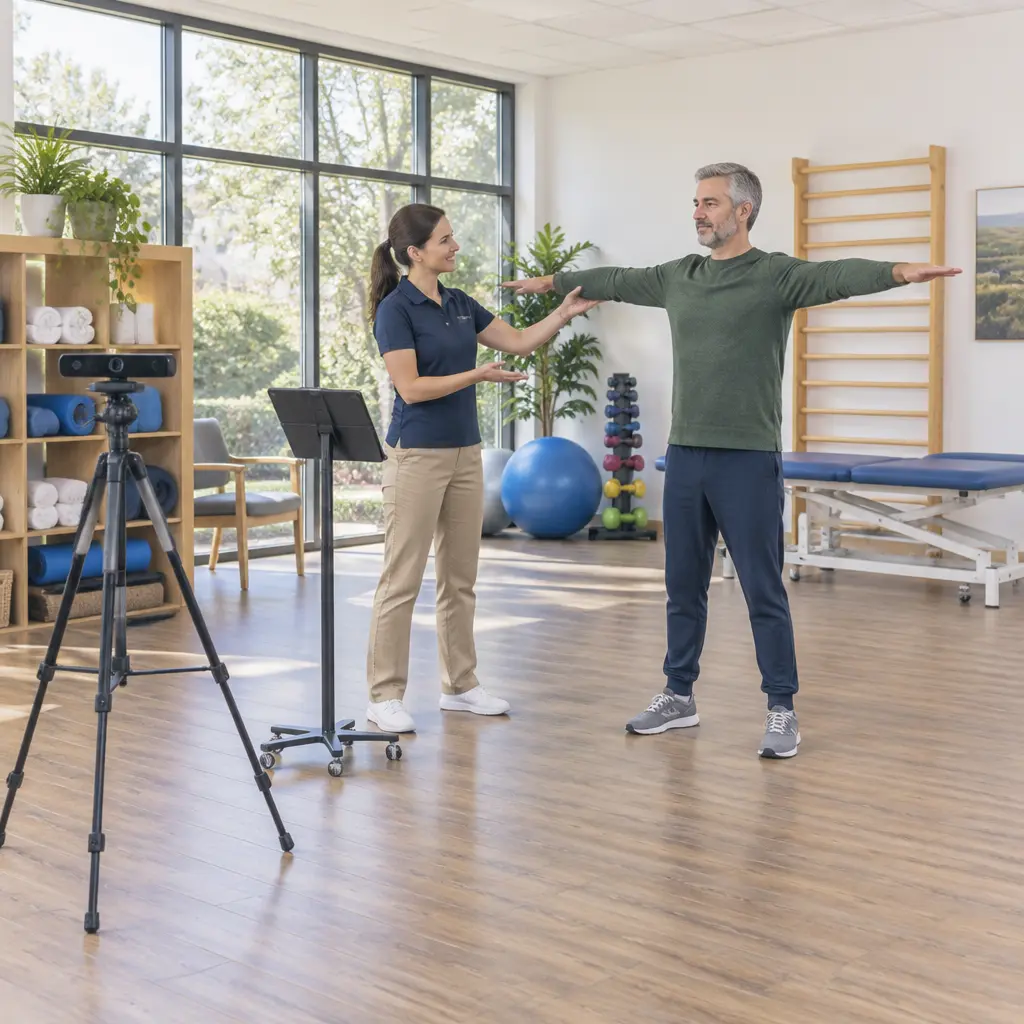
Rehabilitation technology is the set of tools and systems used to help people regain, maintain, or improve physical, cognitive, and communication abilities after illness, injury, or disability. Its future is increasingly shaped by connected devices, artificial intelligence, immersive environments, robotics, and personalized assistive products. These technologies can extend therapy beyond clinics and help clinicians measure progress more precisely, but their value depends on evidence, accessibility, safety, and integration into everyday care. The World Health Organization estimates that 2.4 billion people worldwide could benefit from rehabilitation, making innovation in this field a major health and equity priority.
Connected care expands rehabilitation technology beyond the clinic
Connected rehabilitation uses digital communication and monitoring tools to deliver or support therapy across locations. The American Physical Therapy Association describes telerehabilitation as the provision of rehabilitation services using information and communication technologies. In practice, this includes live video appointments, asynchronous exercise coaching, remote monitoring, and hybrid care that combines in-person visits with home-based support.
The COVID-19 pandemic accelerated adoption, but remote care is now being considered as a lasting way to address travel barriers, workforce shortages, and gaps in follow-up. A 2020 systematic review in the Journal of Medical Internet Research found that telerehabilitation was generally comparable to face-to-face rehabilitation for several conditions and outcomes, while also noting variation in the quality and size of studies. Digital access and clinical suitability remain essential: remote care is not a substitute for every hands-on assessment or intervention.
Tele-rehabilitation and hybrid therapy
Tele-rehabilitation applies video consultations, messaging, and digital care plans to rehabilitation. Hybrid therapy adds these remote elements to selected clinic visits. A person recovering from a joint replacement, for example, might attend an initial in-person assessment and then complete supervised exercises at home with periodic clinician check-ins. This model can reduce travel and make therapy more convenient, while preserving opportunities for direct examination when needed.
The World Health Organization’s 2022 report on global access to assistive technology emphasizes that digital solutions can improve reach, but equitable delivery requires accessible design, affordable connectivity, appropriate training, and support for people with disabilities. Providers should offer alternatives for patients who lack reliable internet, suitable devices, privacy, or confidence using digital tools.
Wearables and remote monitoring
Wearable sensors measure movement or physiological signals through devices such as smartwatches, inertial sensors, and activity trackers. In rehabilitation, they may help track walking speed, repetitions, activity levels, or adherence to a prescribed home program. These measures can give clinicians a broader picture than a brief appointment alone, although consumer-device readings are not automatically equivalent to clinical measurements.
The U.S. Food and Drug Administration distinguishes general wellness products from medical devices based partly on intended use and risk. That distinction matters: clinicians and patients should understand what a device has been validated to measure, how data are stored, and when a concerning result requires professional review. Remote monitoring works best when data are interpretable and tied to an agreed care plan, rather than collected without a clear clinical purpose.
Artificial intelligence personalizes rehabilitation technology
Artificial intelligence in rehabilitation refers to computational methods that analyze data, recognize patterns, or generate recommendations to support assessment and care. Examples include movement analysis from video, adaptive exercise systems, speech-recognition tools, and algorithms that help clinicians organize patient information. The World Health Organization’s 2021 guidance on artificial intelligence for health calls for human oversight, transparency, accountability, and protection of privacy.
AI may make therapy more responsive by adjusting feedback to a person’s performance or identifying changes across repeated sessions. Yet an algorithm’s accuracy depends on its training data and intended population. A system tested primarily on one age group, body type, language, or disability may perform less reliably for others. AI should therefore augment clinical judgment, not replace it.
Computer vision and movement assessment
Computer vision uses cameras and image-analysis software to estimate posture, joint motion, or movement patterns. Some systems can provide feedback during exercises without requiring a patient to wear multiple sensors. This could support remote coaching and help clinicians compare movement over time, but camera placement, lighting, clothing, and mobility aids can affect the results.
Validation is critical before such tools inform clinical decisions. A software estimate should be compared with accepted assessment methods in the relevant patient population, and clinicians need to know its limits. The FDA’s framework for software as a medical device treats certain health-related software functions as regulated products, depending on their intended use and risk.
Adaptive programs and decision support
Adaptive rehabilitation software changes a program in response to user performance, symptoms, or clinician input. For instance, an app might prompt a person to slow down, repeat a movement, or contact a therapist after reporting pain. Decision-support systems can also help clinicians identify trends across patient-reported outcomes and sensor data.
These tools should make their recommendations understandable and allow clinicians to override them. They also require careful handling of sensitive health information. The National Institute of Standards and Technology’s AI Risk Management Framework recommends identifying, assessing, and managing risks throughout an AI system’s lifecycle, a useful principle for rehabilitation providers evaluating new products.
Robotics and immersive systems enable intensive practice
Rehabilitation robotics includes powered devices that assist, guide, or resist movement during therapy. Immersive systems, including virtual reality, use simulated environments to provide structured practice and feedback. These technologies can make repetitive training more engaging and measurable, but they are tools within a treatment plan rather than standalone cures.
The National Institute of Neurological Disorders and Stroke notes that stroke rehabilitation often involves repeated practice of specific tasks to help the brain and body adapt. Robotics and virtual environments can support this repetition, particularly when a therapist selects tasks relevant to a person’s goals and ability. Access, comfort, and the quality of evidence differ by device and condition.
Robotic exoskeletons and assistive movement
An exoskeleton is a wearable mechanical structure that supports or assists movement. In rehabilitation settings, some powered exoskeletons help people practice standing or walking under supervision, while other robotic systems support upper-limb training. Devices can provide repeated, controlled movement and record performance, but they require appropriate fitting, trained staff, safety screening, and substantial space or equipment investment.
The U.S. Department of Veterans Affairs has studied robotic exoskeleton use in rehabilitation for people with spinal cord injury and other mobility limitations. Such examples show both the promise and the practical constraints: a device may enable a specific activity during a session, but it does not necessarily replace a wheelchair, eliminate the need for assistance, or produce the same benefit for every user.
Virtual reality and serious games
Virtual reality places users in computer-generated environments, while serious games apply game mechanics to therapeutic practice. A person working on balance might shift weight to interact with virtual targets; someone practicing hand movement might complete a task-based game. These systems can provide immediate feedback and vary the difficulty as skills change.
A 2021 Cochrane review of virtual reality for stroke rehabilitation reported that virtual reality may improve upper-limb function when added to usual care, although effects vary with the intervention and evidence quality. Clinicians should also consider motion sickness, visual or cognitive sensitivity, fall risk, and whether a simulated task transfers to meaningful daily activities.
Personalized assistive technology supports participation
Assistive technology includes products and services that help people maintain or improve functioning, independence, and participation. The World Health Organization and UNICEF’s 2022 Global Report on Assistive Technology covers products ranging from wheelchairs and hearing aids to communication tools and digital supports. Rehabilitation technology increasingly combines assistive products with individualized assessment, fitting, training, and follow-up.
The scale of unmet need is substantial. WHO estimates that more than 2.5 billion people need one or more assistive products, and this number could rise to 3.5 billion by 2050 as populations age and chronic disease prevalence increases. These estimates underline why affordability, local availability, repair services, and user choice matter as much as technical sophistication.
3D printing and customized devices
Three-dimensional printing builds objects layer by layer from a digital design. In rehabilitation, it can be used to produce customized orthoses, adaptive grips, splints, or prosthetic components. Digital design may allow a device to be adjusted to an individual’s anatomy or task, while local production can sometimes shorten manufacturing timelines.
A 3D-printed product still needs appropriate clinical assessment, material testing, fit checks, and maintenance. The World Health Organization’s assistive technology guidance emphasizes that products work as part of a service system, including assessment, fitting, user training, and repair. A low-cost device that is uncomfortable or unsafe is not an effective solution.
Communication technology and accessible design
Augmentative and alternative communication (AAC) includes methods and devices that supplement or replace speech, from communication boards to speech-generating devices. Advances in eye tracking, switch access, and predictive text can expand communication options for people with complex communication needs. These technologies are most useful when chosen with the person and their communication partners, and when vocabulary and access methods fit everyday contexts.
Accessible design also benefits people who use rehabilitation apps or remote services. The Web Content Accessibility Guidelines from the World Wide Web Consortium provide standards for making digital content perceivable, operable, understandable, and robust. Captions, screen-reader compatibility, adjustable text, plain-language instructions, and alternative input methods can make digital therapy more inclusive.
Evidence, equity, and implementation will determine impact
Technology adoption alone does not guarantee better rehabilitation outcomes. Tools must be evaluated for effectiveness, safety, usability, cost, and relevance to a person’s goals. The World Health Organization’s Rehabilitation 2030 initiative calls for stronger rehabilitation services within health systems, including workforce development, better data, and improved access across the continuum of care.
Implementation also raises questions about reimbursement, clinician workload, interoperability, data security, and digital literacy. A device that produces large volumes of information can increase administrative burden if it does not fit clinical workflows. Procurement decisions should involve clinicians, patients, caregivers, information-security teams, and service managers.
Measuring outcomes that matter
Outcome measurement should go beyond device use or exercise counts. Useful measures may include functional independence, pain, participation in work or community life, quality of life, patient confidence, and sustained use of an assistive product. Combining standardized clinical measures with patient-reported outcomes can show whether a tool makes a meaningful difference in daily life.
A practical evaluation can compare outcomes before and after adoption, examine results across demographic groups, and record adverse events or discontinuation. Health systems should distinguish efficacy under research conditions from effectiveness in routine care, where staffing, home environments, and access to support vary.
Closing the access and data gaps
The digital divide can exclude the very people who might benefit from remote rehabilitation. Older adults, rural communities, low-income households, and people with sensory or cognitive disabilities may face barriers involving connectivity, device cost, accessible interfaces, or technical support. Programs can respond with loan equipment, low-bandwidth options, in-person alternatives, and training for patients and caregivers.
Data governance is equally important. Rehabilitation platforms may collect health information, video, location data, and movement patterns. Providers should explain what is collected, who can access it, how long it is retained, and how users can raise concerns. Privacy protections and clear consent processes help build trust and support responsible innovation.
Conclusion: rehabilitation technology should extend human-centered care
The future of rehabilitation technology will be shaped by connected care, AI-supported personalization, robotics, immersive practice, and customized assistive products. These developments can expand access and provide richer feedback, while WHO’s estimates of growing rehabilitation and assistive-technology needs show why the stakes are high. Their success will depend on evidence-based use, accessible design, privacy safeguards, skilled professionals, and meaningful involvement of people who use the technology.
Health systems and rehabilitation teams should evaluate tools against outcomes that matter to patients, invest in training and equitable access, and use technology to strengthen—not replace—therapeutic relationships. Readers can explore WHO’s Rehabilitation 2030 and Global Report on Assistive Technology for further guidance on building inclusive, sustainable services.
Sources: World Health Organization, Rehabilitation, 2023, https://www.who.int/news-room/fact-sheets/detail/rehabilitation; American Physical Therapy Association, Telehealth, https://www.apta.org/your-practice/practice-models-and-settings/telehealth-practice; Cottrell et al., Real-time telerehabilitation for the treatment of musculoskeletal conditions is effective and comparable to standard practice: A systematic review and meta-analysis, Journal of Medical Internet Research, 2017, https://www.jmir.org/2017/5/e135/; World Health Organization, Global report on assistive technology, 2022, https://www.who.int/publications/i/item/9789240049451; U.S. Food and Drug Administration, General Wellness: Policy for Low Risk Devices, https://www.fda.gov/regulatory-information/search-fda-guidance-documents/general-wellness-policy-low-risk-devices; World Health Organization, Ethics and governance of artificial intelligence for health, 2021, https://www.who.int/publications/i/item/9789240029200; National Institute of Standards and Technology, Artificial Intelligence Risk Management Framework (AI RMF 1.0), 2023, https://www.nist.gov/itl/ai-risk-management-framework; U.S. Food and Drug Administration, Software as a Medical Device (SaMD), https://www.fda.gov/medical-devices/digital-health-center-excellence/software-medical-device-samd; National Institute of Neurological Disorders and Stroke, Stroke Rehabilitation, https://www.ninds.nih.gov/health-information/disorders/stroke; U.S. Department of Veterans Affairs, ReWalk Personal Exoskeleton, https://www.rehab.va.gov/PROSTHETICS/psas/Exoskeletons.asp; Laver et al., Virtual reality for stroke rehabilitation, Cochrane Database of Systematic Reviews, 2017, https://www.cochranelibrary.com/cdsr/doi/10.1002/14651858.CD008349.pub4/full; World Health Organization, Assistive technology, https://www.who.int/news-room/fact-sheets/detail/assistive-technology; World Health Organization, Rehabilitation 2030: A Call for Action, https://www.who.int/initiatives/rehabilitation-2030; World Wide Web Consortium, Web Content Accessibility Guidelines (WCAG) 2.2, 2023, https://www.w3.org/TR/WCAG22/.