
Balance problems after a neurological injury are changes in a person’s ability to stay upright, move safely, or judge their position in space. They can often improve with targeted rehabilitation—not because recovery is guaranteed, but because the brain and nervous system can adapt and people can practice the strength, coordination, sensory, and movement strategies balance requires. The Centers for Disease Control and Prevention reports that falls are a leading cause of injury among adults aged 65 and older, underscoring why balance matters; after neurological injury, assessment and individualized therapy can help reduce fall risk and rebuild everyday function. Understanding what causes imbalance, how recovery is measured, and which treatments may help offers a practical path forward.
Neurological injury and balance: what changes and why
Balance is the ability to keep the body’s center of mass over its base of support while still or moving. It relies on the nervous system combining information from vision, the inner ear, and sensation from the body, then coordinating appropriate muscle responses. The National Institute of Neurological Disorders and Stroke (NINDS) describes traumatic brain injury as a disruption of normal brain function caused by a blow, jolt, or penetrating injury; stroke, spinal cord injury, and other neurological conditions can also disrupt systems involved in balance.
Balance difficulty is not one single symptom. It may involve dizziness, unsteadiness, delayed protective reactions, weakness, altered sensation, poor coordination, or difficulty understanding where the body is in space. These problems may occur alone or together, and the combination helps clinicians choose appropriate treatment. Recovery varies with the injury, the affected systems, other health conditions, and access to rehabilitation.
Sensory integration and postural control
Sensory integration is the nervous system’s process of combining visual, vestibular, and body-sensation signals to estimate posture and movement. If one source becomes unreliable—for example, reduced sensation in the feet—the brain may depend more heavily on vision or the inner ear. Injury can make this adjustment less accurate, so a person may feel less steady in dim light, on uneven surfaces, or while turning their head. Therapists assess these conditions rather than assuming every balance problem has the same cause.
Vestibular, cerebellar, and motor symptoms
Vestibular dysfunction affects the inner-ear and brain pathways that help stabilize vision and sense motion; it may cause vertigo, nausea, or unsteadiness during head movement. Cerebellar injury can affect timing and coordination, while weakness, spasticity, or impaired motor control can make standing and walking less secure. These categories overlap, so examination by a qualified clinician is important—especially when symptoms are new, worsening, or accompanied by other neurological changes.
Balance recovery after neurological injury: what rehabilitation can change
Neurorehabilitation is a structured process that helps a person regain or adapt abilities affected by injury. The World Health Organization’s International Classification of Functioning, Disability and Health frames rehabilitation around body functions, activities, participation, and environmental factors. Applied to balance, this means treatment may address a physical impairment while also practicing meaningful tasks such as transfers, walking to the kitchen, or navigating a busy community.
The phrase “balance problems are fixable” is best understood as “many are treatable and can improve.” Improvement can mean fewer near-falls, safer transfers, greater walking confidence, or better tolerance of head movement—not necessarily a complete return to pre-injury ability. A rehabilitation team may include physical and occupational therapists, physicians, nurses, and other specialists, depending on the person’s needs.
Task-specific balance and gait training
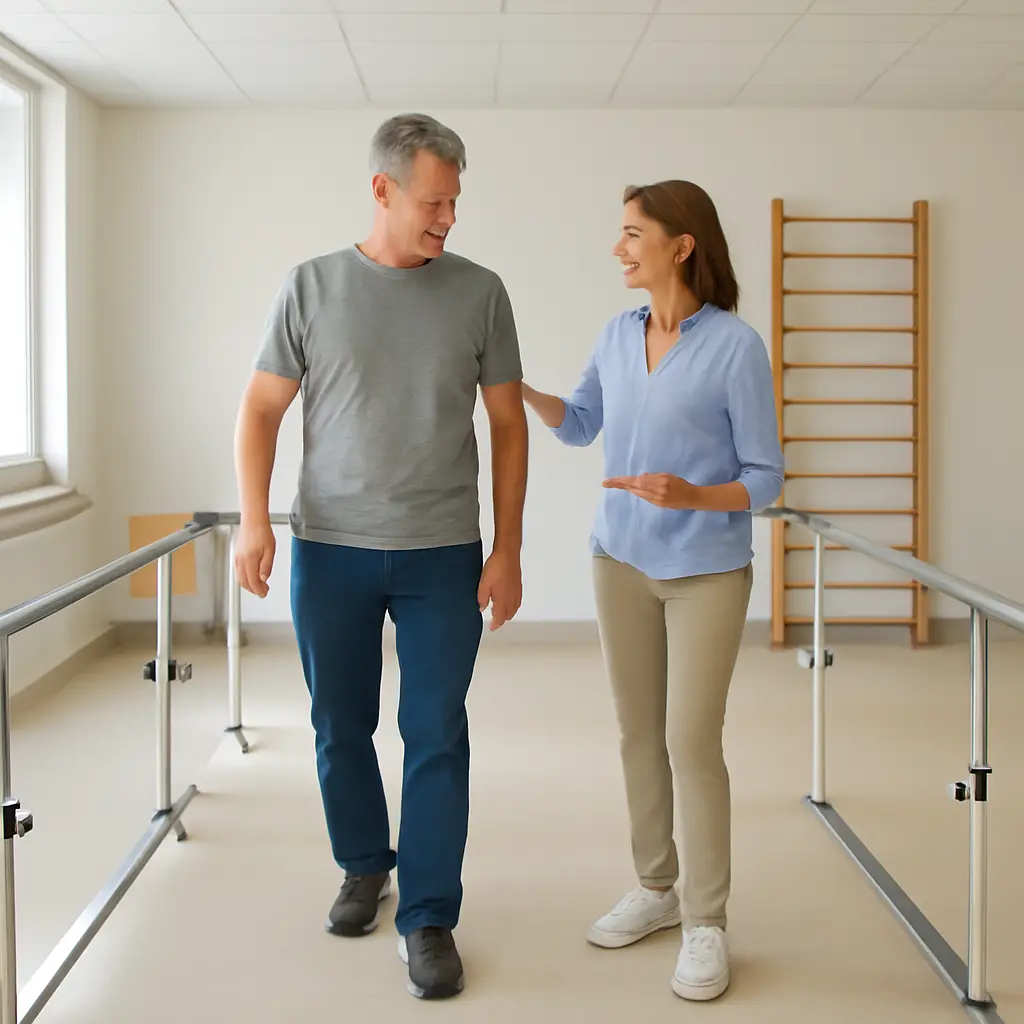
Task-specific training practices the activities a person wants to do, such as standing from a chair, reaching, stepping, turning, and walking. Exercises are adjusted to challenge balance safely and progressively. The American Stroke Association’s rehabilitation guidance emphasizes individualized therapy after stroke; clinicians may use walking practice, strength and coordination exercises, and strategies for safe movement. A therapist can adapt tasks with support, a gait belt, parallel bars, or an assistive device when appropriate.
Vestibular rehabilitation and gaze stabilization
Vestibular rehabilitation is exercise-based care for problems involving dizziness, gaze stability, and balance. Depending on the assessment, a therapist may prescribe controlled head and eye movements, balance tasks, or walking exercises that gradually expose the person to symptom-provoking motion. The Academy of Neurologic Physical Therapy’s clinical practice guidance supports vestibular rehabilitation for appropriate peripheral vestibular disorders; the specific diagnosis matters, and exercises should be tailored rather than copied from a general online routine.
Compensation, assistive devices, and environmental changes
Compensation means using a safer strategy when the nervous system cannot yet perform a movement reliably. Examples include pausing before walking, using a handrail, improving lighting, removing trip hazards, or using a cane or walker prescribed or fitted by a professional. These measures do not mean rehabilitation has failed: they can reduce exposure to risk while strength, coordination, and confidence are being developed. The CDC’s STEADI initiative recommends practical fall-prevention actions such as identifying hazards and reviewing medication-related risk with a clinician.
Measuring progress and reducing fall risk
A balance assessment establishes a baseline and helps the care team choose treatment. Depending on the injury and setting, evaluation may include medical history, neurological and vestibular examination, observation of transfers and walking, and standardized functional measures. Repeating suitable measures over time can show whether performance is changing, but scores should be interpreted alongside real-life goals and safety.
Functional measures and meaningful goals
Common clinical tools include the Berg Balance Scale, the Timed Up and Go test, and gait-speed measures. They assess different aspects of mobility and are not interchangeable; the appropriate test depends on the person’s abilities and clinical context. Goals should translate assessment into daily life—for example, walking safely between rooms, getting into a shower, or turning to answer someone while standing.
Fall prevention is part of recovery
Fall prevention combines rehabilitation with attention to the home, footwear, vision, medication effects, and safe use of mobility aids. CDC data identify falls as a major public-health concern among older adults, but age alone does not explain an individual’s risk. After neurological injury, a clinician can help determine whether supervision, an assistive device, home modifications, or additional medical evaluation is warranted.
A practical example of individualized care
Consider someone recovering from a stroke who is unsteady when turning and has reduced sensation in one foot. Their plan might combine supported turning practice, walking tasks, strength work, footwear and home-safety review, and an appropriate mobility aid. If dizziness or visual instability is also present, the team may assess whether vestibular-specific care is indicated. This illustrates why “balance therapy” is not a single exercise: it is a plan matched to the person’s impairments, priorities, and risks.
When to seek clinical help
Arrange an assessment if balance problems persist after an injury, interfere with daily activities, cause repeated near-falls, or are accompanied by dizziness, changes in vision, weakness, or difficulty walking. Seek emergency help for sudden severe imbalance or a sudden neurological change—such as facial drooping, arm weakness, speech difficulty, or sudden vision loss—as these can signal a stroke. Do not begin challenging balance exercises alone if there is a substantial risk of falling.
Conclusion: balance can improve with the right plan
Neurological injury can affect balance through sensory integration, vestibular function, coordination, strength, and motor control. Assessment helps identify which systems and daily activities are affected; task-specific practice, vestibular rehabilitation when appropriate, compensatory strategies, and fall-prevention measures can support recovery. Progress is individual, and “fixable” does not promise a cure—but meaningful improvement is possible. If balance is limiting daily life, ask a physician or rehabilitation professional for an evaluation and a plan tied to your goals and safety.
Sources: Centers for Disease Control and Prevention, Facts About Falls, https://www.cdc.gov/falls/data-research/facts-stats/index.html; National Institute of Neurological Disorders and Stroke, Traumatic Brain Injury, https://www.ninds.nih.gov/health-information/disorders/traumatic-brain-injury-tbi; World Health Organization, International Classification of Functioning, Disability and Health (ICF), https://www.who.int/standards/classifications/international-classification-of-functioning-disability-and-health; American Stroke Association, Stroke Rehabilitation, https://www.stroke.org/en/life-after-stroke/stroke-rehab; Academy of Neurologic Physical Therapy, Vestibular Rehabilitation for Peripheral Vestibular Hypofunction: An Updated Clinical Practice Guideline, https://www.neuropt.org/practice-resources/anpt-clinical-practice-guidelines/vestibular-hypofunction; Centers for Disease Control and Prevention, STEADI: Older Adult Fall Prevention, https://www.cdc.gov/steadi/


