Rehabilitation technology is the equipment, software, and assistive products used to help people regain or improve movement, communication, self-care, and participation in daily life. The World Health Organization (WHO) describes assistive technology as products and related systems that help maintain or improve functioning and independence; rehabilitation uses these tools alongside clinical expertise, practice, and environmental adaptations. From prostheses and mobility aids to virtual-reality exercises and communication devices, technology can make rehabilitation more accessible and individualized. Its importance is substantial: WHO estimates that 2.5 billion people need one or more assistive products, a number expected to rise to 3.5 billion by 2050. This article explains what rehabilitation technology includes, how it supports recovery and independence, what evidence and limitations matter, and how patients and care teams can choose and use it effectively.
Rehabilitation technology defines tools and systems that support function
Rehabilitation technology is a broad term for devices, digital systems, and engineered solutions used to assess, treat, compensate for, or reduce the effects of injury, illness, disability, or age-related changes. The WHO’s definition of assistive technology focuses on products and related systems that maintain or improve functioning and independence. Rehabilitation technology overlaps with assistive technology, but it also includes tools used during therapy to measure performance, deliver practice, and guide clinical decisions.
The main purpose is not to replace rehabilitation professionals or effort. Rather, a suitable tool can make practice more repeatable, provide feedback, reduce barriers, or help someone carry out tasks that would otherwise be difficult. Technology may support recovery of a function, such as balance after a stroke, or compensate for a lasting impairment, such as providing a powered mobility option. The best choice depends on the person’s goals, abilities, environment, and preferences.
Assistive products support everyday activities
Assistive products are devices that help people perform tasks and participate in daily life. Examples include wheelchairs, walking aids, hearing aids, prostheses, orthoses, adapted utensils, and communication devices. WHO and UNICEF’s 2022 Global Report on Assistive Technology estimates that more than 2.5 billion people need at least one assistive product, and nearly one billion are denied access. These figures underline that access, appropriate fitting, training, and maintenance are core parts of rehabilitation—not optional extras.
Rehabilitation devices can restore, train, or compensate
Rehabilitation devices can be grouped by what they do. Some help restore or train a capacity, such as a balance platform used in supervised practice. Others compensate for a functional limitation, such as a prosthetic limb or a speech-generating device. A third group measures performance or delivers treatment, including motion sensors, biofeedback systems, and some forms of electrical stimulation. A single device may serve more than one purpose, and its value depends on whether it helps achieve meaningful goals in real settings.
This range of purposes leads to a practical distinction: some technology is used mainly in clinics to guide therapy, while other technology is used at home, school, work, or in the community. Both can matter, but devices only produce lasting value when they fit the person’s routines and support continued participation.
Rehabilitation technology improves recovery through practice and feedback
Recovery often involves repeating meaningful activities, gradually increasing challenge, and receiving feedback. Rehabilitation technology can support these principles by enabling controlled practice, measuring movement, and adjusting task difficulty. It can extend practice beyond a therapy session, though it does not guarantee better results: clinical assessment and an appropriate treatment plan remain essential.
Robotics and exoskeletons assist movement training
Robotic rehabilitation devices and powered exoskeletons can guide or assist repeated movements, including stepping, reaching, or grasping. Therapists may use them to provide consistent repetitions while monitoring a person’s response. For example, a person recovering from a stroke may practice stepping with partial body-weight support and therapist supervision. The device can help deliver structured practice, but it is not a substitute for assessing safety, balance, endurance, and the ability to transfer skills into everyday walking.
Evidence varies by device, diagnosis, and outcome. The American Heart Association’s stroke rehabilitation guidance recognizes technology-assisted approaches as potential components of care, while emphasizing individualized rehabilitation. A device’s marketing claims should therefore be distinguished from evidence that it improves outcomes important to the person, such as safer mobility or greater independence in daily activities.
Virtual reality and gaming make task practice engaging
Virtual reality (VR) and interactive gaming present exercises as simulated tasks, such as reaching toward a target or navigating a virtual environment. They can provide immediate visual or auditory feedback and make repetitions more engaging. Some systems are designed for clinics, while simpler programs may be used at home with professional guidance.
A 2017 Cochrane review of VR after stroke found that adding VR to usual care may improve upper-limb function, while evidence for VR replacing conventional therapy was less certain. The finding illustrates an important principle: digital tools are often most useful as an addition to well-designed rehabilitation, rather than as a stand-alone cure. Clinicians also need to account for fatigue, dizziness, visual sensitivity, and access to suitable equipment.
Sensors and biofeedback help quantify performance
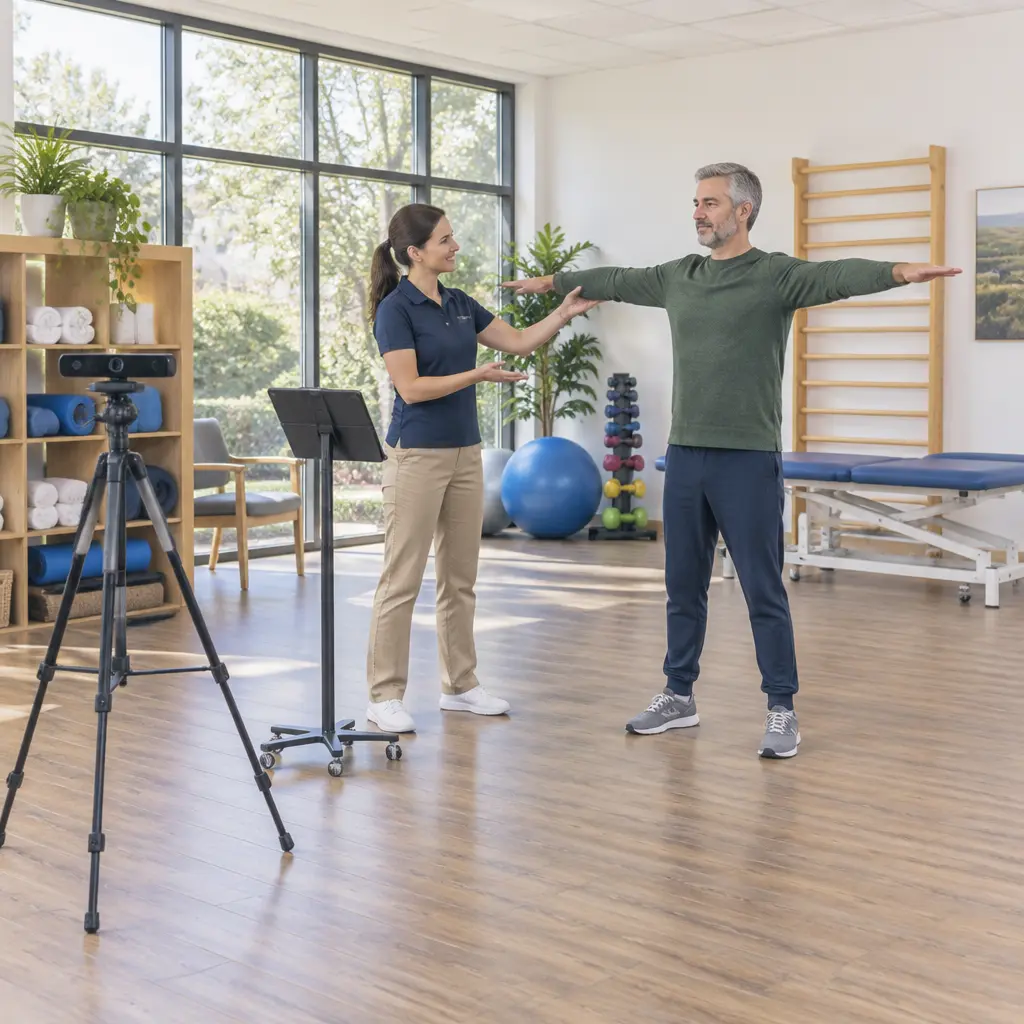
Wearable sensors, motion-capture systems, and biofeedback tools measure aspects of movement or body function, such as steps, joint motion, posture, or muscle activity. A therapist can use those measurements to identify changes over time and give more specific feedback. For instance, a walking sensor may help a person and clinician track activity between appointments, while a biofeedback display can make muscle activation visible during training.
Measurements need context. A step count does not explain whether a person walks safely, experiences pain, or can manage stairs. Devices may also differ in accuracy, and consumer products are not necessarily validated for clinical decisions. Data are most useful when interpreted with the person’s goals, symptoms, and professional assessment.
Rehabilitation technology supports function and independence at home
Rehabilitation is not limited to exercises or clinic visits. Independence also depends on whether a person can communicate, move around, manage personal care, and take part in family and community life. Assistive products and home adaptations can reduce barriers, conserve energy, and make everyday activities safer. In many cases, the most effective solution is a combination of equipment, training, and changes to the environment.
Mobility aids and home modifications improve access
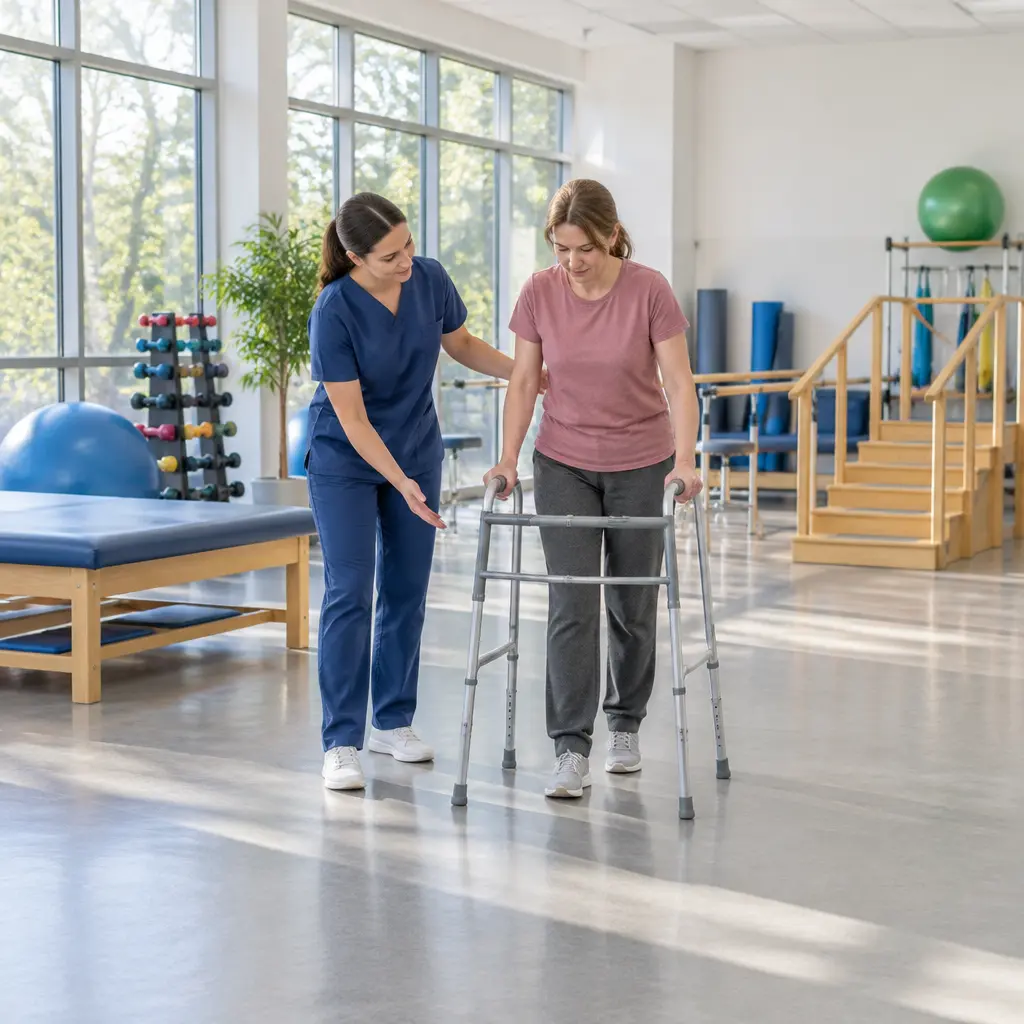
Mobility technology includes canes, walkers, manual and powered wheelchairs, seating systems, prostheses, orthoses, and transfer aids. Home modifications—such as ramps, grab bars, accessible showers, and adjusted doorways—can help a person use these devices safely. An occupational therapist or other qualified professional can assess the person’s daily activities and environment before recommending changes.
A wheelchair, for example, is not simply a product choice. Fit, posture, pressure management, ability to propel or control the chair, transportation needs, and access to repair all influence whether it supports independence. WHO’s assistive-technology work emphasizes access to appropriate products and services throughout a product’s life, including selection, fitting, training, and follow-up.
Communication technology enables expression and participation
Augmentative and alternative communication (AAC) includes methods and tools that support or replace speech. Options range from picture boards and communication books to speech-generating devices and software accessed by touch, switches, or eye gaze. AAC may help people with conditions such as cerebral palsy, motor neuron disease, stroke-related communication disorders, or developmental disabilities express needs and participate in decisions.
Effective communication support is individualized. A speech-language pathologist can assess language, vision, hearing, motor access, literacy, and communication settings, then help the person and communication partners learn to use the system. A device that is technically sophisticated but difficult to access or unavailable when needed may be less useful than a simpler, reliable option.
Tele-rehabilitation extends services beyond the clinic
Tele-rehabilitation uses video calls, secure messaging, remote monitoring, or digital therapy programs to deliver or support rehabilitation at a distance. It may reduce travel and help clinicians follow progress in the home environment. The U.S. Department of Health and Human Services reported that telehealth use among Medicare beneficiaries rose sharply during the COVID-19 public health emergency, showing how quickly remote care can become part of service delivery.
Remote care is not suitable for every assessment or person. Internet access, privacy, digital skills, language access, and the need for hands-on evaluation can affect whether it works. A blended model—combining in-person visits with remote check-ins—may offer flexibility while preserving opportunities for direct assessment.
Rehabilitation technology works best when selected and supported well
A technology’s effectiveness depends on more than its technical features. The person’s goals, clinical needs, home and community environments, cost, maintenance, and access to training all influence whether a device will be used successfully. WHO’s Global Report on Assistive Technology stresses that products must be appropriate and affordable, and that services such as assessment, fitting, and follow-up are essential.
Assessment matches tools to goals and environments
A sound assessment begins with what the person wants or needs to do: walk to a nearby shop, prepare a meal, communicate at work, or return to a valued activity. Rehabilitation professionals consider physical and cognitive abilities, safety, preferences, and the environments where the technology will be used. Trial periods can help reveal practical issues that are difficult to predict from a product description alone.
Training, maintenance, and follow-up protect long-term use
Training helps users and caregivers operate equipment safely, adapt it to daily routines, and recognize when it needs adjustment. Follow-up can address discomfort, changes in function, repairs, software updates, or new goals. Without reliable maintenance and replacement pathways, even a well-chosen device may become unusable. These requirements apply to both physical products and digital tools, including user support and data security.
Equity and affordability shape access
Cost, insurance coverage, geography, shortages of trained providers, and inaccessible design can prevent people from obtaining or keeping useful technology. WHO and UNICEF’s estimate that nearly one billion people lack access to assistive products illustrates the scale of this gap. Access also depends on whether products fit diverse bodies, languages, cultures, and settings. Public services, community-based rehabilitation, inclusive procurement, and repair networks can help close these gaps.
Conclusion: rehabilitation technology connects recovery with everyday life
Rehabilitation technology includes assistive products, therapeutic devices, measurement systems, and digital services that can support recovery, function, communication, and independence. Robotics, VR, and sensors may help structure practice and feedback; mobility, communication, and home technologies can make daily activities more accessible; and tele-rehabilitation can extend care when it suits the person’s needs.
The evidence and global access figures point to both opportunity and responsibility. Technology works best when it is selected around meaningful goals, fitted to the person and environment, paired with professional guidance, and supported through training and maintenance. People considering a device can discuss options with a rehabilitation physician, therapist, or assistive-technology professional and ask how success will be measured, what training is available, and how repairs and costs will be handled.
Sources: World Health Organization and UNICEF, Global Report on Assistive Technology, 2022, https://www.who.int/publications/i/item/9789240049451; World Health Organization, Assistive technology, https://www.who.int/news-room/fact-sheets/detail/assistive-technology; Laver et al., Virtual reality for stroke rehabilitation, Cochrane Database of Systematic Reviews, 2017, https://doi.org/10.1002/14651858.CD008349.pub4; Winstein et al., Guidelines for Adult Stroke Rehabilitation and Recovery, American Heart Association/American Stroke Association, 2016, https://doi.org/10.1161/STR.0000000000000098; U.S. Department of Health and Human Services, Telehealth: A post-COVID-19 reality?, https://aspe.hhs.gov/reports/telehealth-post-covid-19-reality